This page contains affiliate links to Trip.com: we earn a commission if you buy through one, at no extra cost to you.
By Best Area To Stay In editorial desk ·
The short answer
Choose the Pantheon area for old-centre sights or Via Leonina for Monti, with the building confirmed. In Prati, compare the named family rooms. In Trastevere, check bunks and stairs within the room. Near Termini, match the room limit to your group and the station to your train plans.
Compare five Rome hotel streets through family sleeping layouts, building access and the return each evening. Use the particular building and guest entrance when planning from the airport or station.
Santa Chiara anchors the Pantheon side with three adjoining buildings and room-specific terrace or sofa choices. Duca d’Alba anchors Monti with distinct Twin rooms and a main-building Junior Suite. Dei Mellini anchors Prati with one-room and three-bedroom family products. Santa Maria anchors Trastevere with bunk and split-level plans. Diocleziano anchors Termini with a named triple and a two-person terrace suite.
Read each area's full choice notes
Area: Pantheon side: Via Santa Chiara
Best fit
Choose old-centre days with a confirmed family sleeping plan.
Trade-off
The hotel spans three adjoining buildings. Ask for the beds in any larger room with unclear wording.
Arrival
Fiumicino rail reaches Termini; plan the onward hotel trip. The hotel has no parking or ZTL entry permission.
On foot
The hotel is behind the Pantheon. Plan your intended visits from the particular building you book.
Room noise
Inside and outside outlooks differ. Ask about the chosen room’s position if sound matters.
Area: Monti: Via Leonina
Best fit
Choose Monti with a confirmed Twin or main-building Junior Suite.
Trade-off
Some booking choices are separate guest houses. Main-building facilities do not apply to every address.
Arrival
Check the service to Cavour and plan the final journey to your booked building.
On foot
The main hotel is at Via Leonina 14. Guest houses have separate addresses.
Room noise
Ask about the room’s street or courtyard position and windows if sleep matters.
Area: Prati: Via Muzio Clementi
Best fit
Choose Prati with the one-room or three-bedroom family layout you need.
Trade-off
Named family products are offered through the owner’s site. A connecting pair is a separate request.
Arrival
Use the airport or station on your ticket to plan through to Via Muzio Clementi 81.
On foot
Plan to the Vatican entrance on your ticket; admission gates are separate from the hotel.
Room noise
Ask about room position and nearby activity rather than relying on a district label for quiet.
Area: Trastevere: Vicolo del Piede
Best fit
Choose Trastevere with the beds and internal room levels your group can use.
Trade-off
Attic and Senior suites have stairs. Suite 23 has a stone staircase, and Quadruple uses bunk beds.
Arrival
Roma Trastevere station is separate from Vicolo del Piede 2. Plan the final local journey.
On foot
Plan the airport route through to the hotel lane and entrance.
Room noise
Ask about the room’s position and check your evening return route before choosing.
Area: Termini side: Via Gaeta
Best fit
Choose Termini for frequent trains or the named adapted Triple.
Trade-off
Junior Suite with Terrace accepts up to two. The adapted Triple is a separate room choice.
Arrival
Plan from your Termini platform and exit to Via Gaeta 71. Check airport service for your arrival time.
On foot
Check the route from the platform through the station exit to the hotel entrance.
Room noise
Ask about room exposure; a station-side address does not settle bedroom noise.
Choose where to stay in Rome through the days you want to repeat. The Pantheon side, Monti, Prati, Trastevere and Termini give five real hotel-street bases. Then choose the room that fits the whole party. A suite can have internal stairs, a family room can use a shared sofa and a terrace does not add extra guests.
Choose the Pantheon side for old-centre days, Monti for Via Leonina, Prati for its outings, Trastevere for Vicolo del Piede or Termini for rail journeys. Santa Chiara needs an exact family bed list. At Duca d’Alba, confirm the actual building; Dei Mellini separates owner-only family products. Santa Maria has bunk and split-level choices. Diocleziano separates its triple from the two-person terrace suite.
Use the Pantheon side when the old centre forms the heart of your visit. Albergo Santa Chiara puts a checked hotel on Via Santa Chiara, behind the Pantheon. That gives this choice a real guest street. It is a more useful start than choosing the broad word Centro and then finding that the offered hotel is elsewhere. Keep the places you will return to most often on your own map.
The choice works best when you want to return to the same old-centre base between outings. A first visit can fit that pattern, as can a short return built around a few familiar places. There is no need to make every Rome sight part of one walk. Choose the base through the days you have planned, then allow for travel to places beyond that cluster. The room still needs to work when you get back.
Santa Chiara is spread through three adjoining buildings. That detail matters when a room floor or a lift is key to the stay. Ask which building holds the room you are offered. Then ask how you reach it from the guest entrance. A street address can match the hotel without proving that every room shares one simple route from the desk.
Keep that question in the same message as the room request. It is easy to agree on a room name and only later ask about stairs. If the answer changes the fit, you will have done the process twice. A room on the right terms, with a route that suits the guest, is the choice you are trying to make. A general building description is only the start.
Superior, Quadruple and Suite mean different sleeping plans
The Superior Double or Triple gives a clearer first comparison than a broad claim that a hotel suits families. The owner describes a double bed or twins, plus a sofa bed. That can help a party of three ask a precise question. Agree which main bed format is prepared and who uses the sofa. The extra guest should not disappear behind the word Superior.
Outlook is another part of that room choice. The owner describes inside and outside outlooks, with a terrace possible rather than standard in every room. If a terrace is the reason for choosing this hotel, keep it in the written room agreement. A photo from one room does not attach that feature to all the others. You can choose a plain room for the same daily base if the outdoor space has little value to you.
The Quadruple page needs more care. Its English bedding line is not clear enough to allocate four guests without a follow-up. Do not turn an unclear list of beds and sofa beds into a promise of four separate main beds. Tell the hotel the whole party, then ask it to list each sleeping place. A short answer that names the prepared beds is more useful than another room label.
The Suite also needs that check. Its page gives a larger guest limit, but mentions chairs and a sofa in wording that does not fully settle every sleeping place. Chairs are not extra beds. A couple wanting more space and a party using the stated maximum have different needs. Get the bed plan for your party before treating the larger limit as proof that everyone will be comfortable.
A terrace and more floor space do not establish a second closed bedroom. If someone needs to sleep while others stay awake, ask for the actual divisions and doors. If the plan uses a shared living space at night, decide whether that suits the group. There is no need to reject that setup if it works for you. The point is to choose it with the right expectation.
Arrival and room terms on the old-centre side
Santa Chiara says it has no hotel parking and does not provide permission to enter the ZTL. That makes the final road approach a real booking question. A hotel booking is not a driving permit. If you plan to arrive by car, ask for the current legal approach and a suitable parking plan before you set off. Do not use a route to the map pin as permission to drive it.
The hotel can arrange a private airport transfer. That is a service to ask about, with its own terms, rather than a free journey included in every room. Keep the pickup and real guest entrance in the agreement. If you instead take a train to Termini, plan the separate city leg to Via Santa Chiara. The airport rail endpoint and this hotel street are different places.
Read the room rate as carefully as the room name. The owner's FAQ makes breakfast conditional on the rate including it. It also describes cooling or heating according to the season. Do not build the stay around a meal or a room setting that the actual offer does not cover. Ask about anything that would make the room unusable for you, then compare the confirmed package.
This base is a strong candidate when the old-centre pattern is what you want to repeat. Its trade-off is the need to settle the room building and final arrival rather than choosing through a single central label. Once those are clear, decide how much value you place on a terrace or a larger room. Spend on a feature you will use, with its terms kept beside the booking.
Monti gives a different daily base, anchored here by Duca d'Alba on Via Leonina. Keep that street with the hotel name as you compare it with the Pantheon side. A city-centre label is too broad to settle the choice. Look at where your planned days start and end. The best fit is the base whose return you are happy to repeat.
The hotel owner names the Cavour metro link in its location advice. Treat that as a route idea to check for the dates of your visit. It is not a promise that every service or station facility will run as usual when you arrive. Keep the final walk and guest door in the plan too. A metro station near the hotel is still a different point from reception.
This Monti choice can suit a couple wanting a plain room near their chosen daily stops. It can also suit a small group if the exact Junior Suite setup works for everyone. Those are different room decisions within the same base. Start with the party and sleeping plan, then decide which room name belongs on the shortlist. You do not need a suite just because the city stay feels special.
Keep the main hotel and other guest houses separate
The owner's site lists other named guest houses in its booking choices. Their presence on the same site does not make them rooms inside the main hotel. This matters when a rate or room appears under the same broad brand. Retain the full property name and address as well as the room name. Ask which building contains the room being sold.
The main hotel's address is Via Leonina 14. A related room at another street number may have its own entrance and arrival process. Do not carry a lift, desk service or room route from one building across to another without proof. The right question is where this exact room is and how this guest reaches it. A booking page with several products makes that check more useful, rather than less.
If you compare a merchant offer with the owner's room page, match the actual building first. A lower total can be worth considering, but only once you know what it covers. Otherwise you may think you have found the same room through another route when the product has changed. Keep the address in any saved offer or written quote. That small step makes the final choice easier to review.
Standard beds and the main-building Junior Suite
The owner separates Double and Twin versions of Standard and Superior rooms. Friends who want separate main beds should use that distinction. A broad double-or-twin request is less clear than a confirmed Twin product when separate beds are key. Keep the preferred arrangement with the offered room. Ask what remains a request and what has actually been agreed.
The Twin Standard page describes a private bathroom with a shower or a bath. It also distinguishes street-facing rooms from internal courtyard rooms. The window wording does not give us a measured noise result for either. If outlook or sound matters to your sleep, ask about the offered room and frontage. Avoid using a whole Monti label as a test of the bedroom.
The Junior Suite detail is explicit about being in the main building. It describes a double bed and two single sofa beds. That gives a useful basis for a party needing more sleeping places, subject to the offered room accepting the whole party. The two sofa beds do not become two extra bedrooms. Ask where they sit in the layout and how the room is used once they are open.
The same page describes a bathroom with either a bath or a shower. If stepping into a bath is a problem, settle the actual bathroom before choosing. A suite title does not solve that need. The owner also makes a small bed or cot a request subject to availability. Put any such need in the booking message instead of assuming the larger room includes it.
For a family, the shared room can be workable if bedtimes and the sofa layout suit the group. For friends, the double main bed may be the deciding point. For a couple, the extra sleeping places may have no value at all. Each party should assess the same evidence through its own use. There is no need to turn one room into a universal recommendation.
Make the final route part of the Monti decision
A rail arrival at Termini still needs its onward route to Via Leonina. The owner's metro suggestion can be one option, checked against the actual journey and luggage. A road transfer can be another, with the pickup and drop-off agreed. Compare the whole arrival rather than the first city stop alone. The route you will manage with bags may differ from an outing later in the stay.
If you plan several early or late journeys, test the return too. A route that works in the middle of the day may not be the one you use after the last event. You do not need fixed minute claims to make that choice well. You need the dated service, the final guest entrance and a fallback that fits your group. Keep those details with the main-building or guest-house choice.
Choose this Monti anchor when its daily location and actual room setup fit together. The strongest comparison is between a confirmed main hotel room and the other bases on this page. Do not let a similar brand label blur a separate address. Once the building is clear, choose through the real bed format and bathroom, with the arrival planned for your own hour.
Hotel dei Mellini gives the Prati comparison a real point on Via Muzio Clementi. Use it when that side of the river fits the days you will repeat. Put the hotel street and your planned destinations on the same map. A broad wish to stay near the Vatican is not enough to settle every day's travel. The hotel is not the visitor entrance to every site on that side of Rome.
That distinction matters for an early booked visit. Keep the exact meeting point or visitor entrance from the ticket. Then work back to a realistic departure from the hotel. A nearby district label does not give priority entry or remove queues and checks.
The room choice and the entry booking solve separate parts of the day. Let each rest on its own confirmed details.
Prati can also be a base for a family whose main need is the right sleeping space. Dei Mellini lists several family products, with clear differences between them. Those details are a stronger reason to shortlist a hotel than an untested claim that a whole district is family friendly. Start with the actual number of guests. Then choose the privacy and shared space that the group needs.
Four guests in one room or a requested connection
The Family Room for four has a stated maximum of four adults. Its main bed can be a double or twins, with a sofa also in the room plan. That is not a promise of four separate main beds. Ask how the sofa is prepared for the remaining guests. The answer should fit the real party, with the same details kept on the booking.
Some of these rooms have a balcony. Some is the key word when you compare the room with a photo. If outdoor space is a reason to book, ask for it on the actual offer. If it is only a pleasant extra, you can make the bed plan the priority. Keeping those priorities clear makes it easier to compare two rooms with the same family label.
The owner also says connecting rooms are available on request. A Family Room and a confirmed connecting pair are different products. If a closed door between sleeping spaces is key, do not substitute one for the other without checking. Ask the hotel what it can confirm for your dates. A preference written in a notes field is not the same as an agreed pair of linked rooms.
Dei Mellini’s named Family room for four is sold exclusively on the owner’s site. A booking site’s general hotel listing may offer other categories. Ask the hotel for the named layout and the full bed plan rather than assuming that a different offer secures the same family room.
The seven-person product has a different structure
The Family Room for seven is a useful contrast. The owner describes three bedrooms linked by a small corridor, behind one external door. That is more precise than a vague promise of a large family suite. It can matter when guests need private sleeping rooms within one shared outer entrance. It still needs a bed list for the full party.
Do not use the three-bedroom fact to invent seven separate main beds. Ask which room holds each bed and whether any guest uses a sofa. The number of bedrooms and the number of sleeping places answer different questions. Both should suit the group. If some guests retire earlier, the corridor and door layout may matter as much as the guest maximum.
This larger family product is also described as exclusive to the owner's site. Keep that condition with the room comparison. A merchant offer for another Dei Mellini room does not become the same three-bedroom product because the hotel name matches. If the group needs the linked layout, ask for that named product. Save the confirmed room plan with the final offer.
Junior Suite limits need their own reading
The Junior Suite has a bedroom opening into a living area with a sofa. The owner gives a normal limit of three guests. It also describes a narrow exception for two young children sharing the sofa, on request. That exception should not be turned into a blanket four-adult capacity. Give the hotel the actual ages and ask whether the offered room is valid for the whole party.
A living area can provide useful space during the day, but its value changes when it becomes a bed. Think about how much shared space remains once the sofa is open. If everyone will be out for much of the day, that may be a small trade-off. If the group plans time indoors, the layout could carry more weight. Choose through how you will use the room.
The broader room list includes Deluxe rooms with some-only sofa or balcony features. Neither feature should be added to every Deluxe offer. A room label gives you a place to start the query, not a full plan for the stay. Ask for the feature that matters most and the actual guest limit. This is especially useful when comparing a larger two-person room with a family product.
Match the family product to the real arrival
Once the room plan is settled, work through the route to Via Muzio Clementi. Fiumicino airport rail to Termini does not finish at the hotel. Keep the separate city leg and the final entrance in view. For a large party, compare the total journey with bags rather than a headline train fare alone. Any arranged vehicle needs the whole group and luggage declared.
If step-free access is key, ask about the offered room route from the pavement. The three-bedroom structure is not an access survey. A balcony photo is not evidence about bathroom thresholds either. Keep the bed plan and route questions together so that the right family layout does not hide an unsuitable approach. A confirmed answer can make this Prati base a much clearer choice.
Keep the hotel lane separate from the rail station name
Hotel Santa Maria is on Vicolo del Piede in Trastevere. That actual guest street is the anchor for this choice. Do not treat Roma Trastevere rail station as the hotel entrance, or assume that a train with that station name ends the journey. Keep the final local leg on the plan. The same district word can refer to points with quite different roles in the arrival.
Choose this base through the Trastevere days you want to repeat, with a room layout that suits the party. The owner's rooms include plain doubles as well as products with internal levels or bunk beds. That is a real set of trade-offs within one hotel. It gives a more useful comparison than a blanket claim that every room suits families equally. The room can decide the choice even after the district feels right.
The owner's general description places rooms on ground and first floors. That does not make every room step-free. Some named products include internal stairs, and Suite 23 has a stated stone staircase. Ask about the exact room route rather than applying one broad floor description to the whole hotel. A guest who needs to avoid stairs should have a named room answer before booking.
Plain rooms, bunk beds and the two-room Junior Suite
The Double or Twin gives a simple starting point for two guests. Its main bed is a double or twins, with a private bathroom that may have a bath or shower. The Superior Double also lists a two-person bed choice. If separate beds are key, confirm their preparation. If you need a shower rather than a bath, keep that request beside the bed agreement.
The Triple's English bedding line is unclear. It is not safe to repair that line by joining words into a new promise. Ask for the actual sleeping places for three people. State whether the party wants three separate beds or a double with one single. The owner's reply can settle the room fit without relying on a guess about the page wording.
The Quadruple has a clear distinction: a double bed and a bunk bed. That can work for a group who accept that setup. It is a poor substitute for a request for four separate main beds. Ask who can use the bunk and whether it suits the actual guests. Keep that decision with the room name, especially if a traveller cannot use an upper bunk.
The plain Junior Suite is different again. It has two rooms with a bathroom in the middle. The owner lists a double with two singles, or two singles with a bunk bed. Choose through the version offered to your party.
Two rooms may help with separate bedtimes, but the bathroom route and bed format still need to fit. Do not carry one version's beds into another offer.
Attic rooms add stairs and roof limits
The Attic Junior Suite uses two levels joined by stairs. The lower living space converts for sleeping, while the upper level holds the bedroom and its bathroom. That means a guest sleeping below may need the stairs to reach the bathroom. Ask for that route in plain terms. It is a more useful question than asking only whether the suite is large.
The upper space has a sloping roof which the owner notes may not suit tall guests. Keep that fact in the room comparison. A roof feature can be part of the room's appeal and still affect daily use. If headroom is a concern, ask where the lower roof sits in relation to the bed and bathroom. A broad suite photo may not show how you move through the whole space.
The Attic Suite for five has another layout. Its first room includes a sofa and two singles, with a small toilet and sink. The other room has the main double and a private bathroom. That gives a different night-time bathroom plan from the Attic Junior Suite. Compare the actual divisions rather than treating every attic product as the same room in a different size.
An extra bed beyond the Attic Suite's base setup is described as a booking-time request with a charge. Do not add it to the party by default. Put the full group in the enquiry and ask what the hotel confirms. A maximum with a requested extra bed is not the same as a fixed set of prepared beds. Keep any added charge in the total you compare.
Senior Suite and Suite 23 need named checks
The Senior Suite is also on two levels. The lower level has a double with a seating area and bathroom. The upper loft has two singles. Two further singles are on request, so a larger party needs that agreement. Do not read the top guest limit as proof that every possible extra bed will be ready without asking.
This setup can suit a group who accept the loft and shared bathroom route. It may be less useful if everyone needs an enclosed bedroom or wants to avoid internal stairs. Ask which beds are on each level and who will use them. The answers let the party make a real choice. A larger room is only an improvement if its layout solves your needs.
Suite 23 has a different approach: an ancient stone staircase from the portico to the former convent room. Its plan includes a main double bedroom and living space that can become two singles. If you need to avoid stairs, this named detail should stay visible through the whole booking. Do not replace it with a generic ground-and-first-floor hotel description. The exact product gives the decisive evidence here.
Choose Trastevere with a usable room and return
For friends, separate main beds may matter more than an attic setting. For a family, the bunk or split-level sleeping plan may be the key issue. For a couple, a plain double can meet the need without paying for extra beds. Work through those choices before comparing a larger suite total. The best room is the one whose daily use fits the actual guests.
Then return to the journey to Vicolo del Piede. Plan the arrival with bags, and check the return you expect to use on later evenings. Avoid assuming a district's social reputation tells you the sound inside this room. We have not measured it. Ask about the room frontage if that matters, and keep the real guest door as the endpoint of the journey.
Use Termini when the rail pattern earns the choice
The Termini side is a practical candidate when repeated rail journeys shape the visit. Hotel Diocleziano gives that choice a checked guest street on Via Gaeta. Use the actual days on your itinerary to decide whether the station-side base is valuable. A single airport arrival does not have to decide the whole stay. Several onward departures may give the location more weight.
Keep the station point and hotel entrance separate. A rail station includes platforms and exits, with routes that change the final walk. Our map gives a reference point rather than a platform-to-room path. Use your actual train and the route from its arrival area. That is the plan you need with bags, rather than a straight line from a station marker.
This side can also suit a mixed visit if the chosen room solves a key need. Diocleziano has a named triple with wheelchair access, alongside two-person rooms and a terrace Junior Suite. Those details let the party compare room fit within the same hotel. They do not require a general safety or noise grade for the station district. We have not used such a grade here.
Two-person rooms and the terrace limit
The Economy Double and Classic Double list one or two guests, with a double or two singles. Superior Double or Twin is also a two-person choice. If the main need is separate beds for two, use the offered Twin setup rather than assuming a larger room adds a third place. Keep the guest count and bed plan on the same offer. A room name alone does not settle both.
The Junior Suite with Terrace has a stated limit of one or two guests. Its private city-view terrace can be a reason to choose it for a couple. It is not a family triple simply because Suite suggests more space. If a third guest is travelling, start with a product that accepts the full party. Do not hope that a terrace or larger area changes the room's guest limit.
Think about whether the terrace will be used during the stay. A couple planning long days away may value a plain room more than outdoor space. Another pair may want time back at the hotel and choose the terrace on purpose. Both choices can make sense. What matters is that the actual offered room includes the feature you are paying for.
The named access triple needs an exact route
The Triple with Wheelchair Access lists a double plus a single, or three singles. That is a useful named product for a party of three. The owner also describes access features. Treat that as owner evidence, with the actual guest's needs discussed before booking. We have not surveyed the doorway widths or the room route ourselves.
Ask about the path from the pavement to the room and bathroom. Include any turning-space or shower need that would decide the stay. If the bed plan must be three singles, keep that in the same request. A hotel can answer one part of the query without settling the other. The final confirmation should describe the combination that this party needs.
An accessible room label does not certify the whole journey from the airport. The airport train and station facilities are a separate part of that plan. So is the route from Termini to Via Gaeta. Keep those links visible if a step-free journey is key. It is better to work through the whole route than assume the named room solves every stage.
Compare the station base with your other days
Write down the departures for which Termini is the actual endpoint or starting station. Do not group every rail journey under the word Rome without checking its station. Then compare that pattern with the time spent elsewhere in the city. The station-side choice earns its place through the journeys you will really make. It does not need an invented fixed saving in minutes.
For an early flight, check the dated airport service and its first usable journey. Do the same for a late arrival. A convenient station address does not create a train outside its operating hours. If the rail option does not cover your time, plan an appropriate alternative and the hotel arrival process. Keep the trip date and hour in every such check.
Choose Diocleziano through the actual two-person or terrace, or access-triple product, with the rail pattern as the location reason. A couple wanting a terrace and a three-person group needing separate singles are making different decisions. The owner's room list gives both a clear starting point. Keep the offered room and final route together, then compare it with the four other bases here.
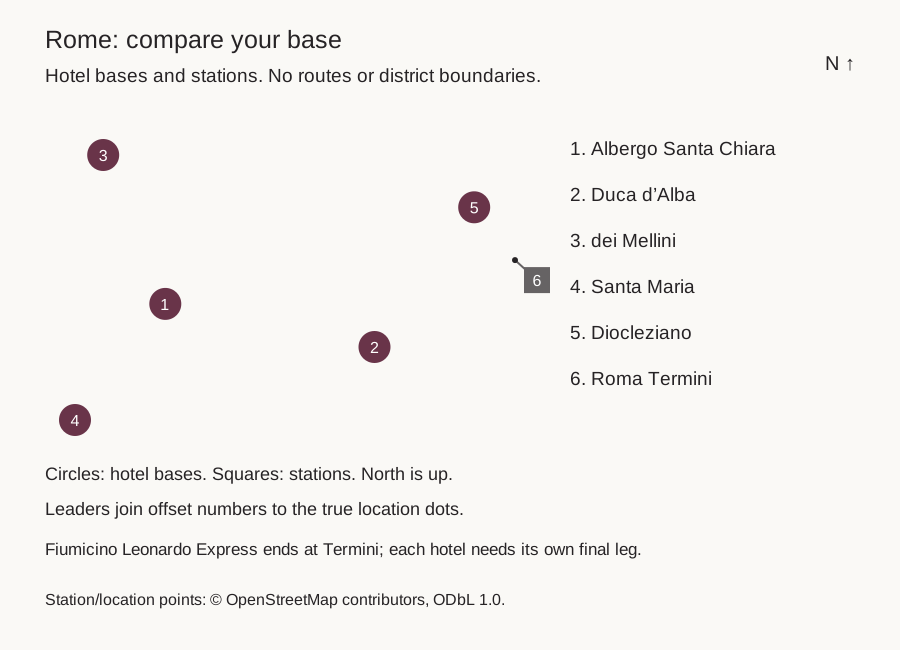
Compare five real hotel locations and a Termini reference. Three hotels and the station use OpenStreetMap points; Santa Chiara and Santa Maria use hotel locations published by Trip.com. The diagram shows no routes or district boundaries. A station point is not an exit, and a hotel point is not a surveyed step-free entrance.
Open the map at full size. Original point map from cited coordinates, checked October 2026. No street map or route geometry is reused.
Compare the five daily bases through the exact beds, room products and internal stairs your party can use. Keep the full guest limit and building address with the offered category. A hotel name alone does not secure every layout or the same sleeping arrangement through every booking channel.
Albergo Santa Chiara
Best for: Repeated Pantheon-side days with a confirmed bed plan
Location: Via Santa Chiara 21, Rome
Official evidence: Superior Double and Triple details name a double or twin main beds plus a sofa bed, with selected terrace or outlook features. The hotel spans three adjoining buildings; confirm which building contains your room.
Trade-off: Ask for every guest’s bed in the Quadruple or Suite offered. The hotel has no parking and cannot provide ZTL entry permission.
Before booking: Confirm the building, route to your room and bed for each guest. Check which breakfast and terrace terms your rate includes. Arrange the final arrival journey within local vehicle-access rules.
Best for: Monti base with named Twin or main-building Junior Suite
Location: Via Leonina 14, Rome
Official evidence: Separate Double/Twin products; main-building Junior Suite names double plus two single sofa beds and a bath or shower.
Trade-off: Owner selector includes separate guest houses; main-hotel room/desk facts cannot cover all related offers.
Before booking: Confirm the particular building and address, plus beds, plus bathroom in your offer. Ask whether the room accepts everyone travelling and secure any requested cot.
Best for: Trastevere stay with chosen real beds and levels
Location: Vicolo del Piede 2, Rome
Official evidence: Quadruple has a double plus bunks. Junior has two rooms with a bathroom between them. Attic and Senior suites have internal levels, while Suite 23 has stone stairs.
Trade-off: The hotel describes ground and first floors, but this does not make every suite step-free. Extra beds must be requested and confirmed.
Before booking: Confirm the room name and sleeping layout. Ask about stairs, roof access and the route to the bathroom. Confirm any bunk or extra bed your group will use.
Best for: Repeated Termini journeys or a named access-triple need
Location: Via Gaeta 71, Rome
Official evidence: Two-person plain rooms and terrace Junior Suite separate from Triple with Wheelchair Access, double plus single or three singles.
Trade-off: The terrace suite accepts up to two. Check the full route from the station platform to your room; the hotel’s access description does not cover every part of that journey.
Before booking: Confirm the named room and beds for everyone. If access matters, check the full route from the station through the hotel entrance to the room and bathroom.
The dedicated Trenitalia Leonardo Express page gives the useful route distinction: nonstop rail between Fiumicino and Roma Termini. The airport train station is inside the airport. Termini is the city endpoint, with a further leg to any selected hotel. Keep that extra stage in the plan even for a station-side stay. The rail journey does not end at the guest desk.
The operator says large luggage has no surcharge on Leonardo Express. It also says integrated Metrebus tickets are not valid for this service. Those facts affect the journey you choose, but they do not settle the total for a whole Rome visit. Check the actual train product and the separate city travel you will use. Do not assume one local pass includes the airport rail leg.
Use the dedicated service page to check the actual dated journey. We have not fixed a fare or first and last train in this guide. A public service description is not proof of every future trip. Check the arrival time and return flight separately. A missed early service cannot be repaired by the fact that the hotel is close to a station.
The five bases need different final legs. Via Santa Chiara and Via Leonina are not the same as Via Muzio Clementi. Vicolo del Piede is not Roma Trastevere station, and Via Gaeta is not a Termini platform. Keep the street number with the chosen hotel. That makes it easier to compare an onward local journey with an arranged pickup.
Ciampino has different bus endpoints
The airport's Ciampino bus page lists direct coach options to Rome Termini. It also describes options toward Ciampino town station or Anagnina. Those are different endpoints. Choose the real route for your arrival and intended city connection. The word bus alone is too broad to build the final journey.
The airport describes bus stops opposite International Departures. Use current airport signs and the booked service instructions on the day. A stop location is still only the start of the bus leg. Keep the actual city stop and onward hotel route in view. For a shared group booking, agree where everyone will meet before comparing the room's late-arrival terms.
Do not carry the Fiumicino rail plan into a Ciampino arrival. Retain the airport code from the flight booking and choose the appropriate route. The same care applies to the return. A hotel called central cannot settle which airport you need or the right departure time. Those details belong to the flight and operator itinerary.
Bags, access needs and a road arrival
Compare the journey with the real luggage and group size. A local connection that looks simple on a map may be less useful for a guest who cannot manage stairs or several transfers. Ask the operator about current facilities where needed. Then ask the hotel about the guest entrance and room route. Neither answer should be used as proof of the other.
For an arranged car, state the whole party and baggage. Agree on the pickup point and the real hotel drop-off or nearest legal approach. Santa Chiara explicitly does not give ZTL entry permission and has no hotel parking. Other hotels need their own current instructions rather than a rule borrowed from that one property. A map route does not establish the legal road approach.
The return deserves the same care as arrival. Check the actual service for the departure date, with time for the airport process required by your carrier. Keep any backup realistic for the party. This is especially useful if the hotel choice rests on an early train or a late bus. The room location helps only when the usable journey fits the hour.
Rome for first visits, family layouts and repeated rail journeys
First visits: choose a repeatable base
A first visit does not require one universal Rome district. Choose the Pantheon side if old-centre days form the pattern you want. Choose the Via Leonina part of Monti if that guest street better fits the planned outings. Prati can work when those days and the Dei Mellini room layouts line up. Trastevere and the Termini side have their own daily patterns to test.
Pick a few anchor days and mark the real start and end points. Then compare the five hotel streets against that plan. You do not need every sight to be close to the room. You do need a return you are content to repeat. That test gives you a useful location choice before photos and room upgrades complicate it.
Families: divide capacity from privacy
A stated guest limit answers whether a product can accept the party, subject to its actual terms. It does not tell you how many main beds or closed bedrooms it has. Santa Chiara's unclear family wording needs a named bed list. Duca d'Alba's main-building Junior Suite names two single sofa beds. Dei Mellini separates one-room family use from the three-bedroom product for seven.
Santa Maria adds bunk beds and internal levels to that comparison. Decide who can use the upper bunk or loft before choosing through the top capacity. A ground-floor hotel description does not remove the stairs inside a suite. Keep each guest's sleeping place on the plan. That makes the final offer easier for the whole group to assess.
Diocleziano's terrace Junior Suite is a two-person product, while its named triple has a different guest plan. More space and an outdoor area do not add a third guest by themselves. Families should choose through the actual room sold for the whole party. If a cot or extra bed is needed, get the request confirmed rather than adding it silently to the plan.
Friends and couples: choose useful features
Friends may place separate main beds ahead of a room's size. Keep the offered Twin or three-single setup with the hotel and dates. A sofa can be fine if the guest accepts it, but should not be hidden in a broad family label. A connecting pair can also help, once it is confirmed. Match the room to the group's privacy needs before comparing totals.
Couples can make a different choice. A terrace may be worth paying for if you will use it, while a larger guest maximum may offer little value. Keep a named view or terrace on the actual offer. Some-only features do not belong to every room in the same hotel. A plain room in the right daily base can be the better use of the stay.
Price comparisons need the same product
We have not assigned fixed cheap or expensive grades to the five districts. A dated offer has its own room and cancellation terms. Compare the same party and nights, with breakfast checked where it matters. Add any requested extra bed and the arrival plan you will actually use. A room total on its own can hide a change in product.
Dei Mellini’s named family products are exclusive to its site, while Duca d’Alba’s booking choices can include separate guest houses. Compare the exact building and room, plus accepted party before deciding one offer costs less. Keep the full address and sleeping plan together.
The final shortlist should contain stays the whole party can use. Keep the guest street and room name with the actual beds, plus any internal stairs. Add the agreed arrival and the terms that affect the total. Once those are clear, choose the base whose daily return best suits the visit. That is a reviewable decision rather than a guess from a broad district label.
Before you choose a room
Choose the hotel street through the days and returns you will repeat.
At Santa Chiara, agree each bed and the exact building route.
At Duca d’Alba, distinguish main hotel from separate guest houses.
At Dei Mellini, use the owner route for named owner-only family products.
At Santa Maria, keep bunks and internal stairs with the actual room name.
At Diocleziano, choose the triple for three; terrace Junior Suite is for two.
Plan from the airport terminal or railway platform you will use through to the hotel’s guest entrance.
Confirm essential terrace and bathroom, plus access needs in the actual offer.
Open the hotel you chose on Trip.com and check the exact room before you pay.
This is desk research from the sources linked below, with hotel location and feature checks in October 2026. We have not stayed at or tested these hotels. The area choices express our judgment about trip fit. No price, availability, safety grade or service rating is implied.
Santa Chiara: location and buildings: Santa Chiara gives its Pantheon-side address and describes several adjoining buildings, so check the route to the actual room rather than assume one shared approach.
Santa Chiara: rate and arrival terms: Santa Chiara explains seasonal cooling and rate-dependent breakfast and provides no hotel parking, so check the actual rate and vehicle arrangements before booking.
Santa Chiara: Superior Double/Triple: The Triple lists a double or twins with a sofa bed for three, while outlook and terrace features depend on the actual room rather than every category.
Santa Chiara: Quadruple wording: The Quadruple's English bed wording is unclear, so ask for the complete sleeping layout rather than assume four separate main beds from the room name.
Santa Chiara: Suite wording: The Suite allows a larger party but does not clearly allocate every sleeping place, so confirm the full beds and any bedroom separation you need.
Duca d’Alba: rooms and booking identities: Duca d'Alba separates its main Via Leonina hotel from guest houses shown in the booking selector, so check the building for the room you choose.
Duca d’Alba: Twin Standard: The Standard Twin lists differing bathroom and window details, which should be checked for the actual room rather than taken as proof of a quiet outlook.
Duca d’Alba: main-building Junior Suite: The main-building Junior Suite lists a double and two single sofa beds, while any cot or added small bed still needs a confirmed arrangement.
Hotel Duca d'Alba: location: Duca d'Alba gives Monti and Cavour metro arrival guidance, which helps plan a route without promising a fixed travel time or access through every building.
Dei Mellini: room list: Dei Mellini gives its Prati address and lists room-specific balcony and sofa features, so confirm them rather than assume every Deluxe has the same layout.
Dei Mellini: family product for four: The four-adult Family product has specific sleeping places and connecting requests, and its owner-site booking terms should stay tied to that exact offer.
Dei Mellini: three-bedroom family product: The seven-person Family layout joins three bedrooms behind a shared outer door, but ask for the complete bed list before booking the whole unit.
Dei Mellini: Junior Suite: The Junior Suite has sleeping and living areas with a sofa, while its limited young-child exception should not be turned into a four-adult allowance.
Hotel Santa Maria Trastevere: Santa Maria gives its Vicolo del Piede hotel address, which is distinct from Roma Trastevere railway station and needs its own final transport leg.
Santa Maria: beds and internal levels: Santa Maria separates bunk and multi-room products from attic layouts with stairs, so confirm the actual beds and approach for the category you choose.
Diocleziano: actual room products: Diocleziano gives room-specific two- and three-person limits and names an adapted Triple, which still needs the actual bed and access arrangement to be confirmed.
Trenitalia: dedicated Leonardo Express page: Trenitalia explains the nonstop Fiumicino to Termini service and ticket conditions, so check the dated departure and separate hotel leg rather than assume local passes are valid.
Rome airports: Ciampino bus choices: Rome Airports distinguishes direct coaches from routes via Ciampino town station or Anagnina, so choose the connection that fits your flight and actual hotel.
Trip.com: Albergo Santa Chiara location: The listing places Albergo Santa Chiara in Rome for the hotel map; check the hotel’s own directions for the entrance and your route.
OpenStreetMap: Hotel Duca d’Alba location: The map shows Hotel Duca d’Alba in Rome so you can compare locations; ask the property which entrance to use with your luggage.
OpenStreetMap: Hotel dei Mellini location: The map shows Hotel dei Mellini in Rome so you can compare locations; ask the property which entrance to use with your luggage.
Trip.com: Hotel Santa Maria location: The listing places Hotel Santa Maria in Rome for the hotel map; check the hotel’s own directions for the entrance and your route.
OpenStreetMap: Hotel Diocleziano location: The map shows Hotel Diocleziano in Rome so you can compare locations; ask the property which entrance to use with your luggage.
Roma Termini: OpenStreetMap reference: This map shows the station’s position in Rome; use the transport operator’s directions to choose an exit and plan the last leg.
A dated check records what the source said at that point. It does not guarantee that the stay or route is unchanged. If you spot an error, send the page and the correction. We can then recheck the affected hotel or area, or arrival note.
Choose through your repeated days: the Pantheon side for old-centre plans, Monti through Via Leonina, Prati for that side and its room options, Trastevere through Vicolo del Piede or Termini for repeated rail journeys. Then check the exact beds and building. The district is only part of the choice; the real room and last arrival leg must fit the whole party.
Does any Rome suite accept a family of four?
No. Diocleziano lists its terrace Junior Suite for one or two guests, with a separate triple product. Other hotels have family rooms with sofa beds or bunks, and some suites have internal stairs. Use the actual room sold for the full party. A larger room name does not add guests, separate main beds or closed bedrooms.
Can I book every Dei Mellini family product on a merchant listing?
Dei Mellini describes its Family products for four and seven as exclusive to its own site. Ask the owner for the exact layout, bed list and accepted party. A requested connecting pair is a different arrangement from the confirmed three-bedroom Family product.
Are all Santa Maria suites in Trastevere step-free?
No such claim is made here. Named attic and Senior layouts have internal levels, and Suite 23 has a stone staircase from the portico. Ground and first-floor wording about the hotel does not settle every room route. Confirm the actual product and bathroom path if a guest needs to avoid stairs, with bunk and roof limits kept visible too.
Does Fiumicino airport rail take me to any Rome hotel?
Leonardo Express links Fiumicino with Roma Termini. The airport station is inside the airport, but Termini is still a separate point from every hotel door. Plan the actual city leg and station exit. Integrated Metrebus tickets are not valid on this airport service, and the dated journey must fit the arrival or return hour.
Is Roma Trastevere station the endpoint for Hotel Santa Maria?
The hotel guest street is Vicolo del Piede 2, while Roma Trastevere is a rail station. Keep a separate local journey between the actual rail arrival and the hotel. The shared district name does not make the points the same. Use the exact hotel street when comparing an onward service or an arranged road arrival.
Verdict: where to stay in Rome
Choose where to stay in Rome through a repeatable daily base and a room the whole party can use. The Pantheon side, Monti, Prati, Trastevere and Termini give five distinct starting points. Keep the real building and beds beside the room name, with internal stairs or owner-only family terms visible. Then finish the arrival at the guest street, rather than a broad airport or station endpoint.
Open the hotel you chose on Trip.com and check the exact room before you pay.