This page contains affiliate links to Trip.com: we earn a commission if you buy through one, at no extra cost to you.
By Best Area To Stay In editorial desk ·
The short answer
Choose The Lenox for Back Bay, The Godfrey for Downtown Crossing, Seaport Hotel for Seaport or Battery Wharf for the North End waterfront. Compare The Charles for Harvard Square in Cambridge. Confirm beds for everyone and any separate bedrooms, then plan the full journey from Logan Airport.
Compare five bases through your repeated visits and the room layout the party can use. Harvard Square is in Cambridge, so keep any river crossing and late return with that choice.
Lenox Penthouse has a private king bedroom; a connecting two-queen room needs a separate arrangement. Godfrey Double Queen has two queens, while Studio and Loft names do not prove a closed bedroom or kitchen. Seaport Two Double lists four; Executive suites separate the king bedroom and living area. Charles Studio is open plan with a kitchenette; Deans Suite has a separate king bedroom and pullout. Battery Wharf One Bedroom Suite lists two, despite its separate living space.
Read each area's full choice notes
Area: Back Bay: The Lenox
Best fit
Exeter and Boylston plans with an exact main-bed or private-bedroom choice
Trade-off
An extra room connected to the Penthouse must be arranged; it is not included by the suite name alone.
Arrival
Plan from Logan Airport through to the Exeter Street entrance.
On foot
Mark your Back Bay destinations and compare the return to this hotel.
Room noise
Ask about room position; courtyard and fireplace labels do not promise quiet.
Area: Downtown Crossing: The Godfrey
Best fit
Washington Street base with two queen beds or an exact adapted product
Trade-off
Studio and Corner King Loft do not confirm a separate bedroom or kitchen.
Arrival
Plan the full Logan Airport journey to the Washington Street entrance.
On foot
Mark your theatre, meeting or visitor entrance and check the route back.
Room noise
Ask about the selected street or courtyard-facing room and nearby activity.
Area: Seaport: Seaport Hotel
Best fit
One Seaport Lane plans with two doubles for four or a king-bedroom suite
Trade-off
Two doubles are different from two queens. Event parlours and extra bedrooms have separate booking terms.
Arrival
If using SL1 to South Station, plan the onward route to One Seaport Lane.
On foot
Choose the waterfront, convention or work entrance you will use.
Room noise
Ask about room position; a harbour view does not settle sleep conditions.
Area: Harvard Square, Cambridge: The Charles Hotel
Best fit
Harvard Square days with a known open studio or closed-bedroom suite
Trade-off
Cambridge is a separate city. Harvard’s buildings and other Boston destinations need individual routes.
Arrival
Check the current Red Line journey and final approach to One Bennett Street.
On foot
Name the Harvard or Cambridge building you will visit and plan to its entrance.
Room noise
Ask about the chosen room’s position and nearby activity.
Area: North End waterfront: Battery Wharf
Best fit
Three Battery Wharf plans with exact beds or a suite for two
Trade-off
One Bedroom Suite accepts two. A two-double room is a separate category.
Arrival
Check the current Logan Airport connection and arrival point at Battery Wharf.
On foot
Plan the waterfront and North End visits on your own itinerary.
Room noise
Ask about room exposure and any private outdoor space; a water view guarantees neither quiet nor a terrace.
Back Bay with exact beds or an arranged larger Penthouse stay
Trade-off
The extra connecting room is not automatically in a Penthouse booking. Fireplace availability is seasonal and product-specific; full party caps need agreement.
Seaport with two double beds for four or a separate king-bedroom suite
Trade-off
Two doubles are not two queens; Hospitality living area and bedroom can be reserved separately; multi-bedroom configurations require a call. Adapted bath types vary.
Harvard Square days with an open kitchenette studio or a closed-bedroom suite
Trade-off
Studio kitchenette does not make a full kitchen or a closed bedroom. Fellows seating/dining area is not proof of a separate bedroom. Full caps need agreement.
Hotel in Boston: Battery Wharf Hotel Boston Waterfront
Best for
North End waterfront with exact beds or a private-bedroom suite for two
Trade-off
A large suite does not inherit the double-room cap. Category beds and occupancy must be matched to the exact offer. Water view does not prove a balcony.
Choose where to stay in Boston by joining the address to your repeated plans and the room to your whole party. Back Bay, Downtown Crossing, Seaport and the North End waterfront give different Boston bases. Harvard Square is in Cambridge, across the river. A harbor view, studio name or suite label does not settle beds and privacy, or the complete Logan trip.
Start with The Lenox for a Back Bay visit, The Godfrey for Downtown Crossing, Seaport Hotel for Seaport plans or Battery Wharf for the North End waterfront. Choose The Charles Hotel when Harvard Square in Cambridge leads your days. Then compare the actual room: two doubles differ from two queens, open studios differ from closed bedrooms and Battery Wharf One Bedroom Suite lists only two guests.
Choose The Lenox when the Exeter Street and Boylston Street address fits the days you have planned. Start with the actual place you must reach each morning, then add the evening return. A guide can call Back Bay a good first base without knowing your theatre seat, meeting entrance or room needs. The address is useful when those specific journeys work.
It is less useful if you keep crossing the city to the same other place. Compare that pattern before paying for a name you know.
The owner separates a Classic Queen from a Superior room. Classic Queen means one queen bed. Superior offers a king or two queens, so keep that exact choice in the reservation. Choose the beds your party needs within that category.
Two guests who want separate main beds should not stop at a promise of space. A family should also agree the accepted number of adults and children in the chosen room. This guide does not turn a bed count into an unstated guest limit.
A Penthouse can solve a different need: it has a private king bedroom and living space. It can also connect to a Superior Queen/Queen room. The hotel asks guests to contact it to arrange this. That extra room is a separate part of the decision.
Ask whether both products are in the offered rate and whether the internal connection is secured for your dates. Two room numbers on the same floor would not meet a need for an internal door. Keep the exact arrangement with the booking.
This matters if adults want one bedroom and children need two queen beds next door. The possible layout is more useful than a vague promise that a suite is good for families, but it is not a complete confirmed booking. Ask for each bed, every accepted guest and the door between the two parts. If only the king-bedroom Penthouse is available, judge it on that basis.
A drawing or written layout of the actual offered rooms can settle a question that a general suite photo cannot.
Fireplaces also need a precise room choice. Lenox describes named fireplace products and a season for their use. Do not add a working wood fire to every room or every date on the strength of that feature. If it is the main reason for your stay, ask about the exact room, your dates and the terms for using it.
A fireplace can be a strong reason to choose one product over another. It does not show the number of sleeping spaces, the bedroom doors or the sound level at night.
The owner lists a mini-fridge among room features. If storage is important, ask about the usable space and the actual item you need to keep. A small fridge does not establish a cooking setup. Back Bay Suite has its own living and meeting or dining space with a wet bar; that wording does not promise a full kitchen.
Match a food plan to the exact equipment. This is especially useful when an extended visit makes eating every meal out less appealing, yet you do not need a second bedroom.
Use a current route tool for your own Exeter Street approach. A map point gives the building location, not the guest door, a step-free station exit or a clear luggage path. You may arrive from South Station. Calling both places central does not finish that trip.
Plan the last part with your bags and actual arrival time. If someone needs help at the hotel entrance, agree where the driver should stop and where staff can meet you. Do not treat a merchant point as a surveyed loading spot.
Choose this base after comparing it with Downtown Crossing on the same terms. Both can fit a Boston visit, but the right one depends on your repeated stops. Put the Lenox bed arrangement and the Godfrey bed arrangement beside the actual travel plans. If one room gives the needed main beds with less cost and fewer extra arrangements, that can matter more than a broad area ranking.
Keep the reason for choosing Back Bay clear enough that another member of your party can check it against the itinerary.
Choose The Godfrey when the Washington Street address in Downtown Crossing supports your repeated plans. It is a specific base, not a promise that all places called Downtown are at the same door. Start with the theatre or actual office and visitor entrance you will use. Then check the journey back after the event rather than only the morning trip.
A short stay with two known destinations can be easier to compare than a long list of possible sights. Leave room for changes, but do not choose a hotel on the hope that its area label covers everything.
The Double Queen gives two queen beds. Keep that word with the room rather than treating all two-bed products across Boston as equal. Seaport and Charles list two-double products, which are a different bed choice. Four people may find the difference in bed width relevant even when a product accepts their party.
The Godfrey description used here does not provide a full guest cap to import into the guide. Ask the hotel to accept each adult and child in the exact offered product, then keep the answer with the reservation.
Studio King uses apartment-style language. That may suggest more room to spread out, but the cited description does not prove a kitchen or a bedroom behind a door. Corner King Loft also gives a distinctive name without settling those needs. If a child sleeps before the adults, a larger open space may not give the needed light and sound separation.
If two adults keep different hours, ask the same door question. A suite-like label, a seating area and a separate closed bedroom are three different facts.
Use The Charles as a useful contrast when you need a kitchenette. Its Studio description lists the equipment and calls the plan open. That gives a clear distinction even if Cambridge does not fit your location needs. The point is not to move a Downtown visit to a different city for a name.
It is to know what evidence would resolve the cooking question. At Godfrey, obtain the actual equipment list before making a food plan. Do not infer a fridge or any hob and microwave from apartment-style wording alone.
The Double Queen Accessible page is more exact about its bathroom. It names a roll-in shower with grab bars and a portable chair, beside the two queen beds. Use that full product name when asking for the room. A general accessible filter can mix rooms with different baths and doors, plus bed plans.
If those features are essential, confirm the offered room and any other required clearances. The published shower description is a useful starting point. It does not replace an answer about the path from the guest entrance to that specific room.
The owner describes street-facing and interior-courtyard views in several products. Those are view and position choices. This guide has not tested sound in either one. If sleep is a concern, describe what matters to the hotel and ask about the actual room offered, any nearby works and events during the stay.
A courtyard label should not silently become a quiet-room guarantee. The same care applies to a high floor or a corner name: each says something about position without proving the conditions you will hear at night.
For a Logan arrival, choose the complete path to Washington Street. SL1 to South Station is one part of a journey. A Blue Line plan includes the terminal shuttle and any later transfer. Compare them with your actual flight time and luggage, using current service alerts.
A route that looks simple on a static map may have an awkward final segment for one member of your party. An agreed vehicle can be a valid choice when it solves that problem, but check the full passenger and luggage load before accepting the quote.
Choose Godfrey when the address and the actual room both work. If you need two queen main beds, retain that choice through the booking steps. For a roll-in shower, keep the named adapted product beside that need. Leave a closed bedroom or cooking space unresolved until the hotel answers.
This is a more useful decision than making every room under one hotel name inherit the same features. It also makes the total rate comparison fair: the offers should meet the same needs before you compare their price.
Choose Seaport Hotel when One Seaport Lane suits the event or work plans and waterfront visits you will repeat. Seaport is not a single point on a map. Use the actual event entrance and the time you must be there, then check the return after the last session or meal. If the hotel is meant to support a convention stay, the venue name alone may not settle the door you need.
For a leisure trip, compare the address with your main stops. A harbor base may not fit every Boston day.
The owner lists Deluxe Two Double and Premier Two Double rooms for four guests. Those are two double beds, not two queens. Keep both the accepted number and the bed width in your choice. A family that accepts the bed plan can compare this with an actual suite offer.
A group that needs more separation should not treat four accepted guests as proof of four individual sleeping places. The room can satisfy a party limit while still failing your preferred sleep setup. Resolve that difference before comparing the complete rate.
Executive Suite gives a king bedroom separate from the living area, where the owner lists a pullout. Harbor View Executive also describes a king bedroom and sofa bed. Those facts help with a need for a bedroom door, but the full party acceptance still belongs to the exact offered product. Ask whether the pullout is approved and prepared for the guest who will use it.
If children are involved, include their ages in the request. Do not make every large room inherit the same cap just because one Two Double product lists four.
Hospitality Suite needs a different check. The owner says the living and bar space and the separate king bedroom can be reserved separately. Check which parts are in your rate. An event parlor may be useful for hosting without being a complete sleeping product on its own.
Ask the hotel to name each included room and the way the spaces connect. If your plan needs both a bedroom and a living area, retain that full arrangement. Do not let the word suite do the work of a room list.
Multi-bedroom options also require a clear answer. The Commodore can be arranged in one-, two- or three-bedroom forms by contacting the hotel. The Farragut and Hull Luxe Suites sit side by side and can be booked separately or together, but that statement alone does not prove an internal connecting door. A party that needs children behind an internal door should ask that exact question.
A party that only wants nearby rooms may accept a different layout. Decide which need you have before seeking a larger booking.
The Admiral description includes kitchen equipment such as a fridge and microwave. This guide does not expand that wording into a full set of cooking tools. Ask for the actual equipment if you intend to prepare meals. A fridge for food and a microwave for reheating can be enough for some trips without meeting another party's need for a hob or oven.
The same room can be a good choice for one plan and a poor choice for another. Name the task you want the space to support rather than relying on a broad kitchen label.
Adapted rooms also vary by product. The room descriptions distinguish roll-in-shower choices from tub choices. Keep the required bath type beside the exact beds and full party acceptance. An accessible room with a tub does not meet a need for a roll-in shower simply because it appears under the same hotel filter.
Ask about the real entrance path and any required clearances as well. The room and its required features must be offered for your dates. A general hotel list does not prove this.
SL1 serves Logan terminals and South Station according to MBTA guidance. That gives a named airport option, not a promise that every departure stops at this hotel's guest door. Use the current planner for the complete route to One Seaport Lane, including any final walk or other leg. Check the return for your actual flight day too.
If you choose a vehicle instead, agree the pickup point and luggage fit. A harbor address does not remove the need to finish either journey, and a ferry should only enter the plan once its current route and operating date work.
Choose The Charles Hotel when Harvard Square is a main reason for the trip. Its address is One Bennett Street in Cambridge, Massachusetts. Keep that city in both the reservation and route search. Cambridge can be part of a Boston visit, but it is not a Boston neighborhood on the same side of every river journey.
This distinction helps when comparing an evening in Boston with an early start in Harvard Square. Plot both days before deciding which base reduces the trips you will repeat most often.
Harvard is not one visitor entrance. Use the exact building, event site or appointment address that matters to you. A hotel can suit Harvard Square without putting every university venue at its door. If more than one person has plans, compare each route from One Bennett Street and from the Boston alternatives.
A base that helps the first person's morning may add a return trip for the second person's evening. Making that trade visible can prevent a group from agreeing on an area name while imagining different journeys.
Deluxe Double lists two double beds. Keep them distinct from Godfrey's two queens or Lenox's Superior two-queen choice. The Charles description used here does not give a full guest cap to assign to every two-double product. Ask the hotel to accept the whole party in the exact room you will reserve.
Two main beds are a useful fact without being the whole booking. If one guest needs a rollaway or a child would use a sofa, that is a separate question with separate terms, rather than something to infer from the floor area.
Studio is open plan and includes a kitchenette with fridge, microwave and Nespresso. That is a clear fit for someone who values those specific facilities and does not need a closed bedroom. A larger open room can be useful for a longer visit, but it does not give two groups separate bedtime space. The kitchenette also does not prove a full cooking setup.
If the trip depends on preparing meals, ask about the exact equipment and storage. If it only depends on simple cold food and reheating, explain that narrower need.
Deans Suite describes a separate king bedroom and living space with a pullout. Chancellors also gives a king bedroom and pullout, with an extra half bath. Those details can matter when comparing how a party uses the room, but a pullout still needs an accepted sleeper and an agreed setup. Ask for the full guest cap of the actual product.
If the bedroom door is essential, keep that requirement in writing. Do not assume the extra half bath means a second full bath or another private sleeping room.
Fellows describes a king or two doubles with separate seating and dining areas. That does not establish a separate bedroom behind a door. Use this as a distinction within the same hotel, rather than treating every upgraded name as a one-bedroom suite. A couple who wants more sitting space may find the product useful even when a family needs a different plan.
Ask for a layout of the actual offered room if the text leaves the doorway unclear. The answer should decide the choice before a higher category name does.
For Logan, check the complete current trip to Cambridge. MBTA lists terminal service on SL1 to South Station with a Red Line connection, but the line name is only one part of the plan. Check service alerts, the actual Harvard Square exit and the last approach to One Bennett Street. If a step-free path is needed, plan that exact path for your date.
A general rail connection is not proof that every station exit and pavement segment will meet the same need. Use an agreed vehicle if it solves the actual arrival problem.
Choose Cambridge with a clear reason. Repeated Harvard Square days can justify the location even when one Boston evening adds travel. A trip led by Downtown Crossing or the North End may point back to a Boston base instead. Compare that trade with the room need: an open kitchenette Studio and a closed-bedroom Deans Suite solve different problems.
Keep the two decisions joined but distinct. A good campus-side address cannot create a missing bedroom, and a useful suite cannot make the planned river journeys disappear.
Choose Battery Wharf when the North End waterfront is a main part of the stay. The address is Three Battery Wharf, Boston. Use that exact address rather than treating every waterfront hotel as the same base. Seaport is another waterfront choice with different repeated journeys.
Put the real dinner or actual visitor and work entrance on your map for each day, then compare the return to the hotel. A harbor view can be a valid preference, but it should sit beside those journeys rather than replace them.
The One Bedroom Suite is an important example of why space and guest count need separate checks. The owner describes a king master and separate living areas, with varied layouts. It also lists occupancy two and one bed. Keep that cap with the exact suite.
A living area does not prove a sofa bed, and a suite that looks spacious does not automatically accept a family of four. If a seller shows different terms, ask the hotel to resolve the exact product and party before treating it as a match.
The Deluxe category offers king or queen beds, or double-double beds and shows category occupancy four. That category-level combination needs an exact room selection. Do not assume that a single queen version gives the same sleeping arrangement as two doubles. Ask for the accepted party and actual main beds of the offered room.
A family comparing the double-double choice with a suite should keep the suite's published cap of two visible. Choosing the larger name could give less usable guest capacity for that family rather than more.
The adapted room page names queen and king beds, plus two-double products with roll-in showers and grab bars. Use the full chosen product when asking about the features you need. Bed count, accepted party and bathroom access must all work together. If someone needs a particular chair, transfer space or route from the entrance, explain that requirement.
This guide does not infer every measurement from the roll-in label. The owner text helps narrow the search. Ask directly about the other needs.
Water-view language also needs care. A room view is not proof of a private balcony, an opening outdoor door or a separate place to sit outside. If private outdoor space is essential, ask for that exact feature. If a view is enough, confirm the offered category and understand any limitation in its wording.
The hero photograph on this guide shows Boston harbor as a destination image. It is not a view from Battery Wharf or any other room in the shortlist, and it does not promise the conditions you will see during your stay.
For arrival, finish the trip to the actual wharf guest entrance. The MBTA Logan page includes rail and bus options plus ferry guidance that can change with the season. A wharf address does not mean a ferry serves the hotel door on your travel date. Check the actual landing, operating day and remaining land leg before using a water route in the plan.
Keep a workable alternative for the real arrival time. This guide does not assign a fixed runtime or an all-night connection to any of the five properties.
If you will use a vehicle, ask where it should stop for the actual guest entrance and whether the load fits. The public map point does not answer that question. If you bring your own car, obtain the complete parking terms and any size limit from the actual offer. A North End waterfront stay is not itself a parking arrangement.
Include the daily cost and any in-and-out terms in the comparison, then judge the location against the places you will really drive or visit on foot.
Choose Battery Wharf when this base and the exact room suit the trip. A couple who wants separate living space can assess the suite on its stated two-person terms. A family should first resolve the actual double-double product and guest acceptance. A traveler who needs a roll-in shower should retain the named adapted room and required features.
These are different reasons to choose the same hotel. Keep each need clear when you compare offers. Each room has its own features.
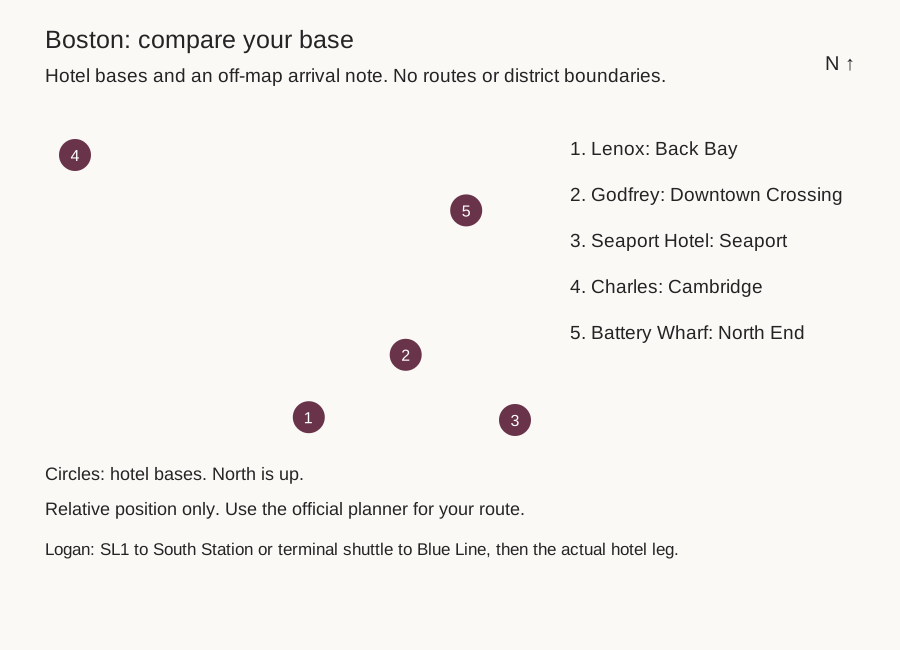
The hotel markers compare Back Bay, Downtown Crossing, Seaport, the North End waterfront and Harvard Square in Cambridge. Plan river crossings, actual station exits and guest entrances using current directions. The diagram shows relative positions rather than walking routes or district borders.
Open the map at full size. Original point map from cited coordinates, checked October 2026. No street map or route geometry is reused.
Use these hotel choices after choosing the repeated visit pattern. Owner room facts support the bed and privacy distinctions; our fit judgments do not claim a room stay, sound test, live price or available inventory.
The Lenox Hotel Boston
Best for: Back Bay with exact beds or an arranged larger Penthouse stay
Location: 61 Exeter Street, Boston
Official evidence: Classic Queen has one queen. Superior offers king or two queens. Penthouse has a private king bedroom; connecting Superior Queen/Queen is available by arrangement.
Trade-off: The extra connecting room is not automatically in a Penthouse booking. Fireplace availability is seasonal and product-specific; full party caps need agreement.
Before booking: Confirm beds for everyone and which bedrooms close with doors. Secure any extra connecting room rather than assuming it is included. Check fireplace-use terms and the full rate.
Best for: Downtown Crossing with two queens or a named room with roll-in shower
Location: 505 Washington Street, Boston
Official evidence: Double Queen names two queen beds. Double Queen Accessible lists two queens with roll-in shower, grab bars and portable chair.
Trade-off: Studio and Corner King Loft names do not confirm a closed bedroom or kitchen. Ask for the guest limit in the named category.
Before booking: Confirm beds for everyone and any separate bedroom or bathroom feature you need. Ask about the offered room’s position and all required charges.
Best for: Seaport with two double beds for four or a separate king-bedroom suite
Location: 1 Seaport Lane, Boston
Official evidence: Deluxe and Premier Two Double products list four guests. Executive Suite separates king bedroom from living area with pullout.
Trade-off: Two doubles are different from two queens. Hospitality’s living area and bedroom can be booked separately. Call to arrange multiple bedrooms, and confirm the adapted bathroom type if needed.
Before booking: Confirm the room name, guest limit and every included bedroom. Ask which doors close, how a pullout is prepared and whether the adapted bath you need is available. Check full charges and current transport.
Best for: Harvard Square days with an open kitchenette studio or a closed-bedroom suite
Location: One Bennett Street, Cambridge, Massachusetts
Official evidence: Deluxe Double has two double beds; Studio is open plan with kitchenette. Deans Suite has separate king bedroom and pullout in living area; Chancellors adds half bath.
Trade-off: Studio kitchenette does not make a full kitchen or a closed bedroom. Fellows seating/dining area is not proof of a separate bedroom. Full caps need agreement.
Before booking: Confirm the Cambridge address and particular building. Ask for beds and any pullout for everyone, which bedrooms close and which kitchen tools are included.
Best for: North End waterfront with exact beds or a private-bedroom suite for two
Location: Three Battery Wharf, Boston
Official evidence: One Bedroom Suite gives king master and separate living areas, with occupancy two; Deluxe category lists king or queen beds, or two doubles and category occupancy four.
Trade-off: A large suite does not inherit the double-room cap. Category beds and occupancy must be matched to the exact offer. Water view does not prove a balcony.
Before booking: Confirm the named room and beds for everyone. The suite’s limit remains two unless the hotel resolves different offered terms directly. Ask about any adapted features you need.
Plan the full Logan arrival and Boston or Cambridge return
Begin the Logan plan with the actual flight and terminal, then the time you can reach ground transport. A scheduled landing time is not a bus-stop arrival time. Allow for the real steps your party must take, then use current MBTA guidance and service alerts. This guide names the route structure that matters to the hotel decision.
It does not publish a fixed journey time, a fare that may change or a last departure that could be wrong on your date. Keep those current details with the itinerary you will use.
SL1 picks up at Logan terminals and goes to South Station, where MBTA lists Red Line and Commuter Rail connections. For Cambridge, that can start a plan with a Red Line leg. For Boston hotels, it still needs a complete final segment to the correct entrance. Do not treat reaching South Station as arriving at Seaport Hotel, Godfrey or Lenox.
Compare the actual transfer and luggage path for each option. A journey with one clear final walk may suit one traveler but be unsuitable for another's mobility or late-arrival needs.
The Blue Line option includes a terminal shuttle to Airport station. The station name can make that extra part easy to overlook. MBTA describes the Massport shuttle as the link from the passenger terminals. It also lists Blue Line connections with Green at Government Center and Orange at State.
Use the current planner to work out whether those transfers help your chosen hotel. More line names do not by themselves make a better route. Compare the complete journey, including station exits and the actual last leg.
For a ferry, check the current seasonal route and actual landing. A harbor-facing hotel and a ferry reference on an airport page do not prove a direct hotel service. The landing may still require a walk or transfer, or a vehicle. Use the current operating date and consider what happens if your flight arrives after the useful departure.
If the water route is part of the attraction, that can be a valid reason to consider it. Keep a practical full arrival plan beside that preference rather than assuming the view resolves the transport.
A vehicle quote should cover the full party and luggage as well as the destination. Confirm the current airport pickup instructions and the exact hotel guest entrance. If someone needs help, agree how it will work at both ends. The public property points in this guide are useful for area comparison, but they are not surveyed doors or loading bays.
Do not use a straight line between a point and a station as a walking route. Use a current route tool. Ask the provider about the parts it must handle.
Check the return to Logan separately. Your departure terminal and required airport arrival time may make a different mode useful. A route that served the inbound flight does not prove the right early-morning connection home. Put the final useful service and an alternative in your plan if time is tight.
For daily travel, compare the journeys you repeat most often rather than only the airport leg. One arrival and one departure can matter less than several days of crossing between Cambridge and the Boston destination that leads your trip.
Choose Boston beds and privacy for the actual trip
For a first visit, choose the two or three places you are most certain to visit before ranking areas. Back Bay can fit Exeter and Boylston plans, Downtown Crossing can fit Washington Street plans and Seaport can fit a different event or waterfront pattern. North End waterfront and Harvard Square add distinct bases. This is not a promise that one of them wins every first trip.
Put the repeated entrances on the map and let the actual room shortlist break a close location choice.
For a family, write down accepted guests and sleeping places as separate lines. Seaport Two Double gives a stated four-person product with two double main beds. Godfrey Double Queen gives two queens, with the actual guest cap still to agree. Battery Wharf One Bedroom Suite lists only two.
Those facts should stay visible when a seller sorts the results by suite or family labels, or by room size. A larger floor area is not a substitute for an accepted child and a real sleeping place. Include the children's ages in every request.
For bedtime privacy, name the door you need. Lenox Penthouse has a private king bedroom, while its possible connecting two-queen room needs an arrangement. Charles Deans Suite has a separate king bedroom and living area with pullout. Seaport Executive separates king bedroom and living space.
Godfrey Studio or Loft does not establish the same separation. Ask for the actual layout of the offered product when the door matters. More seating can be useful without solving the problem of one person sleeping while another uses the room.
For meals in the room, choose the task before the label. Charles Studio lists an open kitchenette with fridge and microwave. Seaport Admiral names kitchen equipment, but the exact tools for your meals still need agreement. Lenox mini-fridge and wet-bar wording do not create a full kitchen.
Godfrey apartment-style wording does not establish any cooking setup. A stay can work well with simple cold food and reheating, or it can require more equipment. Explain which plan you have so the hotel can answer the real question.
For adapted needs, retain the exact beds and bath together. Godfrey Double Queen Accessible names two queens and a roll-in shower with grab bars and portable chair. Battery Wharf's adapted page names roll-in products in several bed forms. Seaport distinguishes roll-in and tub choices.
A broad accessible filter can hide those differences. Confirm the features of the actual offered room and any needed entrance or station path. This guide does not turn one bathroom feature into a universal answer for every traveler.
For a longer Cambridge visit, compare the open Studio with a closed-bedroom suite on purpose. A kitchenette may be more useful than a door for one traveler, while a couple with different working hours may choose the door first. Keep the actual Harvard or other Cambridge entrance in the daily plan. For a Boston-led trip, ask whether the same room benefit justifies the repeated river journey.
The correct answer can change with the itinerary; no need to make Cambridge either the default choice or an automatic rejection.
For a group using several rooms, agree how close they must be. Adjacent, on the same floor and internally connecting are different arrangements. Lenox explicitly asks guests to arrange the extra connecting room for a Penthouse. Seaport's side-by-side suites can be reserved together, but that does not prove an internal door.
Tell the hotel whether the group needs child supervision through a door or simply nearby rooms for adults. Keep every included room and accepted guest in one clear record before comparing the complete booking cost.
Before paying, compare the full terms for offers that meet those needs. Add required charges and any parking or extra-bed cost that applies to the actual booking. Read cancellation terms and agree late arrival if needed. If a seller's room name or beds, or its cap conflicts with the owner page, ask the hotel to resolve that precise offer.
Save the answer with the reservation. The shortlist then supports a real choice: the address works, the party is accepted and the room gives the space your trip will actually use.
Before you choose a room
Choose the actual repeated destination and guest door, including Cambridge when relevant.
Keep two double beds distinct from two queens.
At Lenox, arrange any connecting Penthouse room as part of the confirmed booking.
At Godfrey, do not infer a kitchen or closed bedroom from Studio or Loft.
At Seaport, check which bedroom and living spaces are in the reserved rate.
At Charles, distinguish open Studio kitchenette from a closed-bedroom Deans Suite.
At Battery Wharf, retain the One Bedroom Suite cap of two.
Agree all guests, actual beds, required doors and exact adapted bath.
Check the full journey from Logan Airport and your daily returns. Read all required charges and cancellation terms before paying.
Open the hotel you chose on Trip.com and check the exact room before you pay.
This is desk research from the sources linked below, with hotel location and feature checks in October 2026. We have not stayed at or tested these hotels. The area choices express our judgment about trip fit. No price, availability, safety grade or service rating is implied.
Official Lenox rooms: The Lenox separates bed types and suites with private bedrooms, while room-specific features such as fireplaces should be checked for your category and dates.
Official Lenox Penthouse: The Penthouse description gives a private king bedroom and living space, with a connecting queen room that must be arranged separately with the hotel.
Official Godfrey rooms: Godfrey lists king and double-queen rooms, but its Studio and Loft names do not by themselves establish a kitchen or a closed bedroom.
Official Godfrey Double Queen: The Double Queen description confirms two queen beds, so ask the hotel about the accepted party before relying on the bed count alone.
Official Godfrey Studio King: The Studio King description uses an apartment-style label, but you should confirm cooking equipment and bedroom privacy instead of assuming either from that wording.
Official Godfrey Corner King Loft: The Corner King Loft describes windows and views, which should be compared as room features rather than taken as proof of a separate bedroom.
Official Godfrey adapted Double Queen: The adapted Double Queen description lists two queens and a roll-in shower, with grab bars and a portable chair to check against your needs.
Official Seaport rooms and suites: Seaport distinguishes four-person two-double rooms from suites with separate living space, so confirm the complete configuration when comparing larger family options.
Official Charles Hotel rooms: The Charles Hotel separates double-bed rooms from studios and suites, with kitchens and private bedrooms dependent on the exact room you select.
Official Battery Wharf: Battery Wharf gives its North End waterfront location and room range, helping you compare a waterfront stay with central and station-oriented alternatives.
Official Battery Wharf accommodations: The accommodation list distinguishes king and queen products from two-double rooms, so match your actual bed needs before comparing room prices.
Official Battery Wharf Deluxe rooms: The Deluxe category includes different bed arrangements and a four-person limit, making the exact booked product more useful than the category name alone.
Official Battery Wharf One Bedroom Suite: The One Bedroom Suite describes a king bedroom and separate living areas but lists two guests, so extra space does not confirm extra sleeping capacity.
Official Battery Wharf adapted rooms: The adapted-room list includes different main beds and roll-in showers, so confirm both the bed arrangement and bathroom equipment for the selected room.
Official MBTA Logan connections: MBTA distinguishes direct SL1 terminal service from the shuttle needed for the Blue Line, so plan the connection that fits your hotel's location.
Trip.com: The Lenox Hotel Boston location: The listing places The Lenox Hotel Boston in Boston for the hotel map; check the hotel’s own directions for the entrance and your route.
Trip.com: The Godfrey Hotel Boston location: The listing places The Godfrey Hotel Boston in Boston for the hotel map; check the hotel’s own directions for the entrance and your route.
Trip.com: Seaport Hotel Boston location: The listing places Seaport Hotel Boston in Boston for the hotel map; check the hotel’s own directions for the entrance and your route.
A dated check records what the source said at that point. It does not guarantee that the stay or route is unchanged. If you spot an error, send the page and the correction. We can then recheck the affected hotel or area, or arrival note.
Is Back Bay or Downtown better for a first Boston visit?
Choose the address that best fits the places you will return to. The Lenox anchors Exeter and Boylston in Back Bay; Godfrey anchors Washington Street in Downtown Crossing. Mark actual attraction or theatre entrances and compare complete trips. Neither base removes the need to select a room with the right beds and guest cap.
Is The Charles Hotel in Boston?
The Charles Hotel Harvard Square is at One Bennett Street in Cambridge, Massachusetts. It makes sense when Harvard Square leads your days. Keep Cambridge explicit in a booking and route search. A Boston city break can include Cambridge, but a hotel there is not proof that every Boston or Harvard destination is at the same doorstep.
Does Battery Wharf One Bedroom Suite sleep four?
The cited owner page lists occupancy two for its One Bedroom Suite, despite the separate king bedroom and living areas. Do not inherit a four-person cap from the Deluxe category or assume a living-room sofa is another accepted bed. Obtain exact written terms if an offered product appears to conflict.
Are Seaport Two Double rooms two queens?
No. The owner names two double beds and lists those Deluxe and Premier products for four guests. Bed width still matters to your party. A suite with king bedroom and pullout is a different arrangement with its own full guest acceptance. Keep the actual product name beside the beds and cap.
Does Godfrey Studio King have a kitchen?
The owner uses apartment-style wording, but the cited description does not establish cooking equipment or a separate closed bedroom. Corner King Loft also does not prove another room behind a door. If cooking or bedtime privacy is essential, obtain the exact layout and equipment before booking.
Is Charles Hotel Studio a separate-bedroom suite?
The owner calls Studio open plan and lists a kitchenette with fridge, microwave and Nespresso. That is different from Deans Suite, which lists a separate king bedroom and living area with pullout. Neither a kitchenette nor a sofa settles your full accepted party; confirm the actual offer.
Does Lenox Penthouse include an extra two-queen bedroom?
The Penthouse has a private king bedroom and can connect to a Superior Queen/Queen room, but the owner tells guests to contact the hotel to arrange that connection. Do not treat the extra room as automatically included in a single Penthouse rate. Agree both rooms, the connecting door and all guests.
Can I walk from Logan terminal to the Blue Line Airport station?
The MBTA Logan guidance directs passengers to a free Massport shuttle between the terminals and Airport station. Treat that shuttle as part of the journey. The SL1 is another terminal option to South Station. Check the actual current departures and every final connection to the selected hotel.
Verdict: where to stay in Boston
Choose where to stay in Boston through the repeated address and the actual sleeping plan. Lenox gives Back Bay, Godfrey Downtown Crossing, Seaport Hotel Seaport and Battery Wharf the North End waterfront. Charles gives Harvard Square in Cambridge. Keep each bed width, room cap and bedroom door with its own product, then finish the complete current Logan route and total booking terms.
Open the hotel you chose on Trip.com and check the exact room before you pay.