This page contains affiliate links to Trip.com: we earn a commission if you buy through one, at no extra cost to you.
By Best Area To Stay In editorial desk ·
The short answer
Choose Royal Sonesta for the French Quarter, Old No.77 for the Warehouse District, Roosevelt for Roosevelt Way or Pontchartrain for St Charles Avenue. Confirm beds for everyone, bedroom privacy and the named window or balcony category. Check airport boarding or pickup arrangements and the final journey to the hotel.
Compare four hotel bases through the room features you will use. A street balcony differs from an interior balcony, and a lightwell window differs from an outward view. Confirm the specific bed conflicts before booking; a sofa does not raise a stated guest limit.
Sonesta’s Interior Balcony Two Queens takes four with a semi-private courtyard or pool balcony; Split Level King has spiral stairs. Old No. 77 separates windowless Interior, lightwell Classic and outward-facing Artist Loft. Roosevelt’s two-queen one-bedroom suite takes four despite its sofa; ask about the conflicting king-suite bed count. Pontchartrain’s Thalia has a king and two twins sharing a bathroom, while Melpomene has two kings, a connecting bathroom and galley kitchen. Confirm Polyhymnia’s second bedroom directly.
Read each area's full choice notes
Area: French Quarter: Royal Sonesta
Best fit
Bourbon Street base with exact interior or street-balcony choice
Trade-off
A semi-private balcony is shared. Split-level suites have spiral stairs.
Arrival
Plan from Louis Armstrong Airport to the entrance at 300 Bourbon Street.
On foot
Check your French Quarter venue entrances and late return route.
Room noise
Ask about the balcony and room position if quiet matters.
Area: Warehouse District: Old No.77
Best fit
Tchoupitoulas base with chosen window and bed setup
Trade-off
Interior is windowless. Classic faces a lightwell rather than an outward view.
Arrival
Plan the full airport journey to 535 Tchoupitoulas Street.
On foot
Choose the museum, event or visitor entrance you will use.
Room noise
Ask about internal activity near a windowless room as well as its outlook.
Area: Roosevelt Way: The Roosevelt
Best fit
Central street base with distinct-bedroom two-queen suite for four
Trade-off
A sofa does not raise the guest limit. King-suite descriptions conflict on one king or two; resolve the offer directly.
Arrival
Plan the full airport journey to 130 Roosevelt Way.
On foot
Check the particular Canal Street, French Quarter or venue entrance and the return.
Room noise
Ask about the room and events during your stay.
Area: St Charles Avenue: Pontchartrain
Best fit
St Charles plans with exact named king/twin or two-king suite
Trade-off
Suite titles do not allocate every bed. Check shared bathrooms and guest limits in the named category.
Arrival
Plan through to 2031 St Charles Avenue.
On foot
Choose your St Charles destination and arrange French Quarter returns separately.
Room noise
Ask about room exposure and nearby activity for your dates.
Choose where to stay in New Orleans through your evening plans and the room you need. Start with the actual hotel street. Royal Sonesta suits French Quarter plans, while the Old No 77 is in the Warehouse District. Compare Roosevelt Way or St Charles Avenue for the other stays below. Check the windows and stairs alongside each bed and the full guest limit.
Choose Royal Sonesta for French Quarter plans, the Old No 77 for the Warehouse District, Roosevelt for Roosevelt Way or Pontchartrain for St Charles Avenue. Check the actual beds, windows and balcony terms. Sonesta has split-level suites, while the Old No 77 separates windowless from lightwell rooms. Roosevelt’s two-queen one-bedroom suite lists four, but its king-suite bed wording needs clarification. Plan the airport journey and daily returns before comparing the full rate.
Choose Royal Sonesta when French Quarter plans lead the stay. Use 300 Bourbon Street with the booking and arrival instructions. Compare the real evening venue and complete return before deciding through a balcony or view; a broad Quarter marker does not settle the guest-door approach.
The balcony range is the first detail to keep precise. An Interior Balcony room looks toward the courtyard and pool, while street-facing products serve a different outlook. The owner calls the interior balcony semi-private. That does not promise private outdoor space or a Bourbon-facing balcony.
The wider hotel address does not settle the room view.
Bed types remain distinct within that range. Interior Balcony Two Queens lists four with two main queen beds, while the king product lists two. Two Doubles is another bed type, not a shorter way to describe the queens. Keep the full type with your real party so that a similar balcony name does not hide a different sleeping plan.
The Bourbon balcony use policy is another reason to read the real terms. The owner describes common balconies shared across rooms and has rules for their use. A room with access to a shared space can suit some visits, but it is not the same choice as a private balcony. Ask what area your real booking includes and keep any event-exact terms with the offered rate.
A split-level suite adds a different layout rather than just extra floor space. The named Back Patio King product has a spiral staircase joining bedroom and living space. It should not be chosen for a stair-free need on the strength of the distinct-bedroom phrase. Keep the real route between sleeping and sitting areas with the guests who will use it.
If a bedroom door is the reason to choose a suite, ask about that exact door. A split level can distinct spaces by height without answering every privacy question, and a Junior Suite label does not prove a closed bedroom. Explain whether someone will sleep while others use the lounge. The useful answer identifies the real room and the path to the bathroom as well as the bed.
Keep the sleeping plan beside the guest limit. Ask the hotel to name the bed or prepared sleeper for every guest in the exact offered room. A sofa photograph or extra sitting area does not tell you whether an overnight bed is included or suitable for that person.
For the area choice, list the Quarter places you want to repeat and any outings that take you elsewhere. Use real entrances rather than a general wish to be near the action. If you have late plans outside this area, complete those returns too. A distinctive balcony can be a welcome room feature without being the right reason to accept every extra journey in the itinerary.
Room sound needs a direct question for the real stay. Interior and street-facing types describe outlook, not a firm noise ranking. Give the hotel your sleep hours and ask what exact room request it can agree. A courtyard-facing room should not be described as quiet merely because its view is different from the street.
For the MSY arrival, keep the hotel's real useful entrance with the chosen mode. Current airport bus boarding is one part of that journey, followed by the useful city stop and final hotel leg. A route into New Orleans is not proof of a direct drop at the Bourbon Street front desk. Compare the full plan with bags and the hour your flight reaches the terminal.
Royal Sonesta is a candidate when the Quarter plan is planned and the real room's beds and balcony suit the party. It needs more work when the choice assumes a private street balcony or ignores the split-level stairs. Resolve those points before paying for an outlook that does not meet the need. Then keep the complete arrival and late return beside the full booking terms.
Choose Old No. 77 when Warehouse District plans make 535 Tchoupitoulas Street useful. It is a different return from a hotel inside the French Quarter. Compare the actual museum or event entrance with the hotel door, then the particular window and sleeping arrangement your party needs.
Window type is a main decision here. The owner separates Interior rooms, which are windowless, from Classic rooms with lightwell windows. Those are not interchangeable ways to describe an ordinary outward view. Decide what kind of daylight and outlook you want before choosing through a room price that may belong to a different type.
A lightwell window can admit light without giving the street or city view you had in mind. If looking outward is part of the room's appeal, use the exact offered product that says so. Do not infer that view from the hotel's exterior or a gallery image of another room. The word Classic should remain attached to its real window type during the booking comparison.
Interior rooms can suit guests who knowingly choose no window. That should be a planned room decision rather than a surprise at arrival. It also should not become a promise of quiet or better sleep for everyone. Ask about the real room exposure and your needs, while keeping the simple window fact distinct from a sound claim the evidence does not prove.
The bed setup differs as well. Classic names king or queen beds, plus a two-double choice. Interior has its own named bed range. Keep doubles distinct from queens and confirm the whole party for the real type.
A window preference should not accidentally change the main beds that your guests agreed to share.
Artist Loft is another distinct product. The owner names a king with a pullout couch and an outward-facing window. That can provide a different sleeping and daylight plan from a room with two main doubles. It does not by itself prove a closing bedroom door, so ask about the real layout if distinct sleep times are central to the stay.
The Studio Twin should not be folded into the Artist Loft choice. Its bed is a lofted twin, which is a different main bed and a different access question from a king loft suite. If reaching a raised sleeping place is unsuitable for the guest, keep that as a filter from the start. A shared design word does not make two room products serve the same needs.
Ask the hotel to agree full caps with the real sleeping places. A pullout couch is useful evidence of a bed option but does not answer every guest-count and rate question. Keep all guests and any needed door or bath in the same reply. That avoids combining the useful features of several rooms into a product you have not really been offered.
For a longer visit, think about how the window choice affects ordinary time in the room. Someone who plans to work there or return during the day may value the outlook differently from a guest who mostly sleeps there. That is a choice for your routine, not a claim that one type is best for everyone. Compare the real use with the cost of the room you can book.
For local outings, complete the path to each real visitor entrance and the useful way back. A museum or event can have a different entrance from the point shown at the centre of its site. If you need a step-free route, ask about the path you would really use. Keep the hotel point as a location aid rather than proof of a surveyed guest door.
The airport trip must finish at that useful entrance too. Current MSY service reaches city stops that still need joining to the hotel. With bags or a late landing, compare the full final leg against another mode's current whole-party quote. A low-cost segment is not the same as a useful arrival unless every remaining part works for the guests.
Old No.77 is a candidate when the Warehouse District suits and the exact window and bed plan are chosen on purpose. Keep Interior distinct from an outward room and a lightwell from a street view. A loft label does not prove a private bedroom. Resolve those points through the real product.
Then compare its full terms with the real visit you will make.
Choose the Roosevelt for a central base at Roosevelt Way, keeping its point distinct from a hotel inside the Quarter or along St Charles Avenue. The right comparison uses the real venue or visitor doors in your plan. A general central address does not settle every walk or late return. Put the real trips beside the room before deciding that location alone makes the stay work.
The two-queen one-bedroom suite gives useful evidence for a group. The owner names a private bedroom with two queens and a stated cap of four. A sofa appears in the living space, but it does not raise that accepted guest number. Keep the four-person product with the real rate rather than infer six from counting possible sleeping surfaces.
The private bedroom may be useful when guests have different routines. Ask what door closes and how the living room reaches the bathroom after someone goes to bed. The title is useful starting evidence, while your exact privacy need may be more detailed. Keep the answer with the full suite name and guests instead of a broad request for more space.
Roosevelt’s one-king one-bedroom card lists two kings while its prose says one. Ask the hotel for the exact beds and accepted party in the offered category before booking it. Keep that answer with the room name rather than borrowing the two-queen suite’s limit.
A conflicting card matters even when one part sounds more likely. The useful question is what room and beds will really be supplied under your booking. Ask the hotel to resolve that with the full type and rate. A similar product name should be checked again if the needed main beds or private space differ from the room you first reviewed.
For two guests, a suite with one agreed main bed and a distinct lounge can be useful without any extra overnight guest. For four, the two-queen main-bedroom choice may support a different sharing plan. Discuss who sleeps where before comparing the larger floor area. A living room is valuable space, but its size is not a guest cap or a guarantee of an included extra bed.
Keep adapted bath needs with the real room rather than a gallery image. The owner warns that a photo may not reflect a exact adapted product or feature. Ask about the needed bath and useful path for the full party. A standard suite photo should not stand in for the exact setup that a guest requires to use the room.
For the location choice, use real Canal-area or Quarter trips rather than a broad promise that everything is close. Check the public path to the venue door and the return at the hour you expect to travel. Include any needed step-free route from the start. A hotel-centre point is a useful first guide, but it cannot prove the complete journey between two entrances.
The current Hilton location page says an airport shuttle is not available. Build a real MSY plan rather than assign a hotel transfer to the booking. If using public transit, join the real current city stop to the hotel entrance. If using a provider, agree the mode-exact airport pickup and useful drop-off at the property.
If a cruise or onward journey follows the stay, use the ship or provider’s actual terminal and pickup, plus baggage instructions. A central hotel address does not include transport to that terminal. Arrange the complete connection for your date and keep it with the room plan.
Ask about the real room if sleep is the reason to choose this base over another. A view or floor name does not prove what current events or nearby activity will sound like inside. Give the property the real sleep hours and ask what can be agreed. Keep a recorded request as a request if the answer does not include a firm room feature.
The Roosevelt is a candidate when the central plan and consistent two-queen suite evidence fit. Hold the disputed king count until the exact product is resolved, and retain the stated four-person cap even with the sofa. Compare those real room terms with a complete arrival and repeated daily trips. That is a stronger basis than expecting a generic suite label to settle every need.
Choose Pontchartrain when St Charles Avenue plans lead the visit. Its address at 2031 St Charles Avenue gives a separate return from the Quarter and Warehouse District. Compare the places you will repeat and the latest journey back before choosing through a named suite.
The named suite range needs close reading. Thalia describes a master king with an adjoining second bedroom containing two twins, sharing a large bathroom. That is useful bed evidence for a given family or group setup. It still needs the real accepted guest count and any needed closing doors agreed for the room and rate you are offered.
Think about the shared bath as well as the bedrooms. Guests with different routines may need to know how it is reached from each sleeping area. Two bedrooms do not by itself mean two private bathrooms or equal access from every part of the suite. Ask for the real floor plan when that route is important to the way your party will use the room.
Melpomene is a different two-bedroom product. The owner names kings in both rooms, with a connecting bathroom and a galley kitchen beside the living space. Those features should stay with that exact suite. A guest who wants two main kings has a different starting point from a group that needs the king-and-twins setup described for Thalia.
The galley kitchen also deserves an exact tool check if cooking is central to the stay. A named kitchen is stronger evidence than a minibar, but it does not settle every appliance or utensil you may need. Tell the property what you want to prepare and ask about the real included equipment. Do not carry those kitchen features into another suite that does not name them.
Calliope names a king bedroom and an extra living room with a sofa. The sofa is not treated as a proved sleeper in this guide. If someone needs that sleeping place, ask whether the real room can take the full party and what bed would be provided. A seat in a lounge should not become an included overnight bed through assumption.
Polyhymnia’s description identifies a master with two doubles and living space, but does not clearly name the second bedroom’s beds. Ask the hotel for the full room plan before booking. Another suite’s king or twin layout does not answer what this category provides.
Keep double beds distinct from queens throughout the room search. A name that sounds broadly similar can still give a different bed size or sharing plan. List who will use each main bed, then compare the exact type and cap. If the offered product changes, review the real sleeping setup again instead of assuming the same plan survives the new name.
For local travel, use real St Charles destinations and current service rather than the presence of a street name alone. A hotel on the avenue does not prove that every desired trip has a direct useful service at every hour. Complete the real stop or pickup and the final entrance. Include the late return to the hotel, especially when an outing takes you back from another area.
The airport trip should end at the real Pontchartrain entrance. Current MSY bus choices have distinct city endpoints, followed by an onward leg that still needs to work for your party. Compare the whole route with another mode if the last part is awkward with bags. Do not stop the plan when the airport bus reaches New Orleans and assume the hotel trip is finished.
Room exposure should be checked for the exact stay. A St Charles base is not a blanket quiet-room promise, just as a Quarter room is not proof of the opposite. Tell the hotel your real sleep needs and ask about the product it can offer. Keep the answer with that room instead of turning an area preference into a sound ranking.
Compare Pontchartrain when St Charles Avenue and a named suite fit the visit. Confirm each bedroom’s beds and any sofa sleeping use, together with the full guest limit. Keep kitchen equipment with the particular category that supplies it, then settle the actual rate and daily return before payment.
Then join its terms to the complete airport and daily travel for your visit.
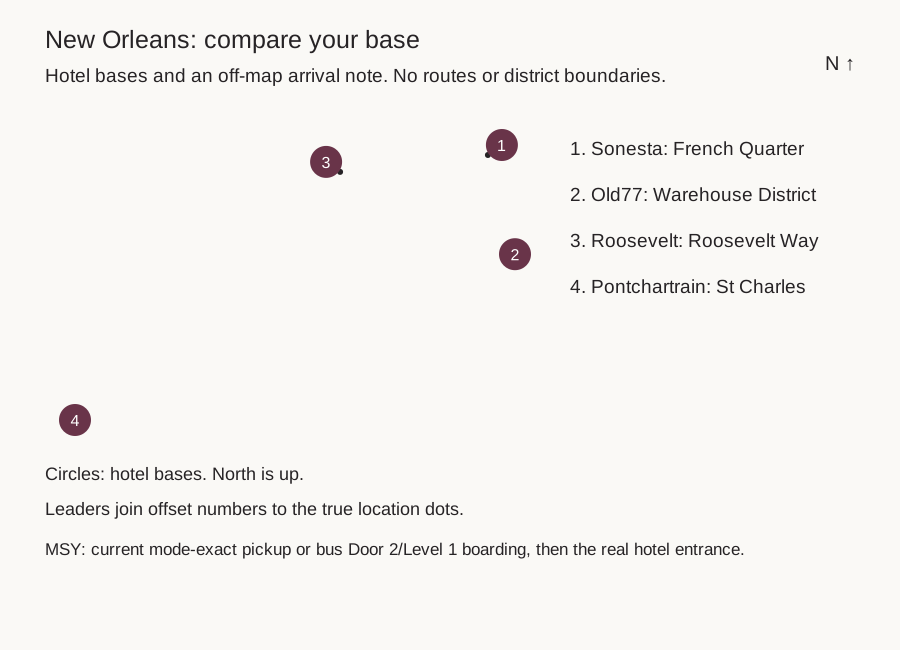
The markers compare the Quarter, Warehouse District, Roosevelt Way and St Charles Avenue. Leader lines keep close locations clear. Plan streetcar service, walking routes and any cruise or airport journey separately; the diagram does not show transport paths or actual guest doors.
Open the map at full size. Original point map from cited coordinates, checked October 2026. No street map or route geometry is reused.
Choose the base through repeated plans and the exact room through its windows and beds, plus accepted guests. Resolve conflicting bed descriptions directly before paying. Confirm bedroom doors and any essential kitchen tools, then keep the airport pickup and useful late return with the complete stay.
The Royal Sonesta New Orleans
Best for: French Quarter with exact balcony and two-main-bed choice
Location: 300 Bourbon Street, New Orleans
Official evidence: Interior Balcony Two Queens lists four and semi-private courtyard/pool balcony. King lists two; named split-level suites have spiral stairs.
Trade-off: Interior is not Bourbon frontage or private balcony. Two doubles are not queens; suite name alone does not prove closed room or extra bed.
Before booking: Confirm beds for everyone, any separate bedroom and the full step-free route you need. Ask whether your balcony can be used and which entrance to use on arrival.
Best for: Warehouse District with a planned window and bed plan
Location: 535 Tchoupitoulas Street, New Orleans
Official evidence: Interior is windowless; Classic has lightwell windows. Artist Loft gives king, outward window and pullout; Studio Twin has a lofted bed.
Trade-off: Lightwell is not outward view, Loft is not proved private bedroom and raised twin differs from standard bed. Exact caps need agreement.
Before booking: Confirm the named room and a main bed or sofa sleeper for everyone. Ask about daylight, access around the beds and any separate bedroom or bathroom feature you need.
The Roosevelt New Orleans, A Waldorf Astoria Hotel
Best for: Central Roosevelt Way with distinct two-queen bedroom for four
Location: 130 Roosevelt Way, New Orleans
Official evidence: Two Queen Beds One Bedroom Suite names private bedroom and a four-person cap, with sofa in living space. Owner location says no airport shuttle.
Trade-off: Sofa does not raise cap. The One King suite card shows two kings while its prose names one. Ask the hotel to confirm the beds in the offered suite.
Before booking: Ask the hotel to resolve any conflicting king-room description for the named offer. Confirm the guest limit, separate bedrooms and bathroom features, then plan airport and daily journeys.
Best for: St Charles Avenue with a named king/twin or two-king suite
Location: 2031 St Charles Avenue, New Orleans
Official evidence: Thalia gives king and two twins across two bedrooms with shared bath. Melpomene names kings in both bedrooms and galley kitchen with connecting bathroom.
Trade-off: Confirm the full guest limit and which bedrooms close with doors. Calliope’s sofa is not confirmed as a sleeper. Ask for the second bedroom’s beds in Polyhymnia rather than relying on its title.
Before booking: Confirm the named suite, guest limit and which bedrooms close with doors. Ask how each guest reaches the bathroom and which cooking tools are included. Plan the journeys you will repeat each day.
Complete the current MSY trip and each real late return
The current MSY public-transport page places bus boarding on Level 1 Baggage Claim outside Door 2, in Zones B4 and B5. Use that current airport guidance rather than older text that puts airport buses on another level. Boarding location is a real part of the arrival with bags. It still needs the useful current service and the full final hotel leg beside it.
The same airport page distinguishes JET's Veterans-Airport E1 from RTA's Airport Express 202. E1 reaches City Park Avenue, while Route 202 has Downtown city points. Those are different onward plans, not two names for one identical door-to-door route. Pick the useful service for the real date, then join its real stop to the hotel you selected.
Do not use a route's city destination as proof of a hotel drop-off. The Quarter, Warehouse District, Roosevelt Way and St Charles Avenue still need distinct final legs. Include the useful stop and current onward travel with bags. A low-cost first segment should remain only part of the comparison until the whole trip works for the real party.
Use current operator guidance for the useful departure after landing. Include time to leave the aircraft and collect bags rather than choose a service from scheduled touchdown alone. Check any service change for the date. A route can be a useful option in general without giving a departure that joins up with a given late flight.
If a transfer is needed, keep the current fare and pass rules with the real operators. The airport page distinguishes systems and notes limits on which products transfer between them. Do not assume that one purchased fare covers every onward service. Retain the complete current cost rather than copy a past price from a general airport guide.
Taxis and ride-share use their own current airport instructions. Follow the airport and selected provider for the mode you choose instead of treating the bus door and zones as a universal pickup. Give the provider the full hotel identity and useful entrance. That keeps the real arrival distinct from a broad city-centre quote that may describe a different trip.
For a group, include vehicle capacity and bags in the agreed plan. The number a room accepts does not prove that one vehicle fits the same people and luggage. Ask about the full party and any access need before comparing totals. A complete quote is more useful than an attractive starting amount that still leaves part of the group without a practical ride.
Late flights need a delay procedure. If using a booked provider, agree how the flight and contact instructions will be handled. If relying on public service, retain a useful fallback if the real arrival misses the plan. Keep the hotel's late-arrival instructions too, so the transport and room access form one usable chain rather than distinct hopes.
The journey home needs a fresh check for the real departure time. Confirm the current hotel pickup point or useful service and transfer, then use the airport's real departure instructions. Do not assume the reverse direction works at the same frequency or hour as arrival. The route that reaches the room can be useful without settling an early flight home.
Daily travel should use real venue and visitor doors in the same way. A city map point cannot show the final path to a theatre entrance or a tour operator's boarding point. Use the real organiser instructions for the date. If a step-free route is needed, keep it with both the outward trip and late return rather than assume the general area name is enough.
For a cruise, use the real terminal and ship instructions instead of a broad port pin. A hotel chosen for another part of the visit does not include a transfer unless the real booking terms say it does. Agree bags and pickup with the provider you will use. Keep that onward journey distinct from the airport route, even when both begin or end near central New Orleans.
Finish the travel budget with every needed leg for the whole party. A room saving should not depend on an not yet agreed free shuttle or an onward service that is not useful at the real hour. Keep open questions visible until they are resolved. The four bases can each work for a planned visit, but they do not share one universal arrival or late-return plan.
Choose New Orleans light and beds with real private space
Start a New Orleans shortlist with the days and evenings you mean to repeat. Choose the Quarter, Warehouse District, Roosevelt Way or St Charles Avenue through those plans before comparing the largest room. The real windows and beds then help narrow the product within the useful base. A strong choice needs both parts, rather than a room you like joined to an unsettled daily journey.
For a first Quarter visit, Royal Sonesta gives a clear Bourbon Street identity with several balcony types. Decide whether you really want street frontage or an interior courtyard outlook. Keep any shared balcony terms with the rate. A balcony that suits the trip can be a useful feature without a promise that every balcony at the hotel serves the same purpose.
For a guest who needs to avoid stairs, the Sonesta split-level product should remain a firm layout check. A private bedroom does not remove the spiral staircase between living and sleeping space. Ask about another exact product through its own route and features. Do not treat a larger suite as a step-free solution merely because it offers more floor area.
For guests who value daylight while in the room, Old No. 77's window types deserve an early filter. Windowless Interior, Classic lightwell and outward-facing products support different preferences. Choose knowingly instead of treating all lower-priced rooms as ordinary view alternatives. Then keep the needed main beds and full guest cap with the window type you really select.
For a solo traveller considering a lofted twin, bed access is part of comfort. It is a distinct choice from Artist Loft's king and pullout setup. Ask about the real path to the sleeping place if the raised bed is a concern. A room's creative label should not hide the practical way you will reach and use its main bed each night.
For four guests, discuss main beds and sharing before comparing suite names. A consistent Roosevelt two-queen one-bedroom product keeps a cap of four even though a sofa appears in the living space. Other properties still need their real accepted numbers agreed. Do not choose through the largest collection of beds visible in photographs and assume that sets the room's permitted party.
For guests with different sleep hours, ask which doors close and how the bath is reached. A private bedroom can be useful without proving every detail of privacy or access. A loft or Junior label may give less clear closure evidence. Keep the exact usable routine with the full product name rather than request a generic upgrade and hope it supplies the needed layout.
For a king-and-twins setup, Pontchartrain Thalia gives a different starting point from a room with two doubles or queens. Keep its shared bathroom and accepted cap in the same check. Melpomene's two-king description is a different product with a connecting bath and kitchen. Use the real room that fits the guests instead of combining those features into one broad two-bedroom promise.
For a stay built around cooking, retain the kitchen only with the room that names it and confirm the real tools. A minibar or drinks area does not prove a meal-preparation space. Even a named galley kitchen needs the equipment your routine depends on agreed. Compare that exact product with the full stay cost instead of assuming every suite at the property offers the same use.
For a guest who needs an adapted bath, use the real product details rather than general room photos. Keep the needed bath and path together with real beds and the full party. A view upgrade or a larger suite should not silently replace an adapted layout that the guest requires. Ask the property to identify the exact usable room before treating the stay as settled.
For a mixed itinerary, count the trips away from the preferred base. One outing from St Charles to the Quarter is a different pattern from travelling between them every day and returning late each night. Use current full costs and useful returns for the real party. A room-price comparison becomes clearer when the repeated travel appears beside it instead of remaining outside the budget.
For a short visit, avoid adding a hotel move just to collect more area names. Packing and a new arrival process should earn their place in the available time. Compare whether one well-matched room supports the main plans with planned outings elsewhere. A complete base can be more useful than several attractive hotels joined by trips that have not been worked through.
For a stay tied to another journey, keep the real flight or ship requirements with cancellation terms. A room-layout question that remains open may affect which rate is sensible to book. Get the needed bed or door agreed rather than leave it as a request on a difficult-to-change booking. The flexibility you choose should fit the parts of the itinerary that are still unsettled.
Finish with two real room choices whose trade-offs you understand. Retain the exact type and all accepted guests, then the needed light or balcony and any bedroom door. Add current MSY and the most demanding late return to the full stay total. Choose the New Orleans base whose usable room and complete daily plan support the visit you intend to make.
Before you choose a room
Choose the real base through real venue and visitor doors.
Keep interior balcony distinct from Bourbon frontage and private outdoor space.
Retain spiral stairs with Sonesta split-level products.
At Old No. 77, compare windowless and lightwell rooms with outward windows.
Keep lofted twin distinct from king loft suite and real bed access.
At Roosevelt, the two-queen one-bedroom suite accepts four despite its sofa. Ask the hotel to resolve the king-suite bed count before booking that category.
At Pontchartrain, name Thalia or Melpomene and real shared bath/doors.
Agree full guests and all needed beds with the exact product.
Plan the full airport journey and daily returns. Compare all charges and cancellation terms before paying.
Open the hotel you chose on Trip.com and check the exact room before you pay.
This is desk research from the sources linked below, with hotel location and feature checks in October 2026. We have not stayed at or tested these hotels. The area choices express our judgment about trip fit. No price, availability, safety grade or service rating is implied.
Rooms | The Royal Sonesta New Orleans: Royal Sonesta separates semi-private courtyard balconies from street and Bourbon outlooks, with king and two-queen products carrying different guest limits.
Suites | The Royal Sonesta New Orleans: The Split Level King has spiral stairs between sleeping and living space, so check access and the actual guest limit rather than assume a single-level suite.
Bourbon Balcony Suite Policies: Royal Sonesta explains that common Bourbon balconies are shared and subject to use rules, which differs from a private outdoor space attached to one room.
Official old77 guide: The Old No. 77 distinguishes windowless interiors from lightwell and outward-facing rooms, so match the actual window and bed layout to the named product.
Official old77 classic guide: The Classic description gives a lightwell window rather than an outward street view, a useful distinction if daylight and outlook matter differently to your stay.
Suites | The Roosevelt New Orleans: The Roosevelt gives suite-specific limits that sofas do not expand, while conflicting king-bed wording makes confirmation of the actual room useful before booking.
Accommodations - Pontchartrain: The Pontchartrain separates named two-bedroom layouts from king rooms with seating, so confirm any unclear second bedroom and sofa sleeping place before adding guests.
flymsy - Louis Armstrong New Orleans International Airport: MSY gives current baggage-claim bus pickup points and distinguishes suburban from downtown routes, so plan the present stop and final hotel leg rather than an older boarding location.
Trip.com: The Royal Sonesta New Orleans location: The listing places The Royal Sonesta New Orleans in New Orleans for the hotel map; check the hotel’s own directions for the entrance and your route.
Trip.com: The Pontchartrain Hotel location: The listing places The Pontchartrain Hotel in New Orleans for the hotel map; check the hotel’s own directions for the entrance and your route.
A dated check records what the source said at that point. It does not guarantee that the stay or route is unchanged. If you spot an error, send the page and the correction. We can then recheck the affected hotel or area, or arrival note.
Where should a first-time visitor stay in New Orleans?
Start with Royal Sonesta for French Quarter plans, Old No. 77 for the Warehouse District, Roosevelt for its central street base or Pontchartrain for St Charles Avenue. Choose through the places you will repeat and the exact room. Keep the real late return beside the full room cost.
Is every Royal Sonesta balcony private and on Bourbon?
No. The owner names interior courtyard/pool balconies as semi-private and distinguishes street-facing products. Its Bourbon balcony policy also describes common shared balconies. Confirm the balcony type and current access rules in the rate offered. Do not assume that it gives a private terrace facing Bourbon Street.
Do Sonesta split-level suites have stairs?
The cited Back Patio Split Level King product names a spiral staircase between bedroom and living space. Do not choose it for a stair-free need on the strength of the distinct-bedroom phrase. Ask about the exact usable layout and accepted guests before booking.
Do all Old No. 77 rooms have outward windows?
No. Interior rooms are windowless, while Classic has lightwell windows. Artist Loft names an outward window with king and pullout couch. Keep the exact window type with the room you book; a lightwell is not an outward street view or a guarantee about noise.
Is Old No. 77 Artist Loft the same as a lofted twin?
No. Artist Loft names king and pullout couch with outward window. Studio Twin is a distinct product with a lofted twin bed. Agree real bed access and the full guest cap with the exact room, plus any needed closing bedroom door.
Does Roosevelt two-queen suite allow six because it has a sofa?
The cited Two Queen Beds One Bedroom Suite lists four guests despite its living-room sofa. Retain the stated cap and accepted party. The distinct king suite also has conflicting bed-count text, so its disputed count needs direct product proof before use.
What beds are named for Pontchartrain Thalia?
The owner names a master king and an adjoining second bedroom with two twins, sharing a large bathroom. Full accepted guest count and real closing doors still need agreement. Melpomene is a different two-king product with connecting bath and galley kitchen.
Where does the current MSY airport page place bus boarding?
It lists Level 1 Baggage Claim outside Door 2, Zones B4 and B5. The same page distinguishes E1 to City Park Avenue from RTA 202 city service. Use the current schedule and real final hotel leg rather than older level 3 boarding text or one generic airport-bus plan.
Verdict: where to stay in New Orleans
Choose where to stay in New Orleans by comparing your daily base and room needs. Royal Sonesta gives the French Quarter, Old No.77 the Warehouse District, Roosevelt Roosevelt Way and Pontchartrain St Charles Avenue. Confirm windows and balcony types alongside beds and the full guest limit. Ask about bedroom doors and stairs, then plan the airport journey and late returns before paying.
Open the hotel you chose on Trip.com and check the exact room before you pay.