This page contains affiliate links to Trip.com: we earn a commission if you buy through one, at no extra cost to you.
By Best Area To Stay In editorial desk ·
The short answer
Choose Nikko for Union Square plans, Fairmont for Nob Hill, Argonaut for Fisherman’s Wharf or Hyatt Regency for the Embarcadero. Compare Hyatt Place on Third Street for South of Market and Del Sol on Webster Street for the Marina. Confirm beds and bedroom privacy for everyone. Resolve disputed room details and plan airport and daily journeys before booking.
Compare six bases through your real daily plans, exact bed sizes and bedroom layouts. Similar suite or two-bed headings can hide different sleeping arrangements.
Nikko’s Deluxe Double has two doubles for four, while Double Queen has two queens for four. Ask about Junior’s third sleeping place. Fairmont Junior Family is open plan; the Family bunk description differs between heading and body, so confirm all beds. Argonaut’s one-bedroom suites have a private king and queen sleeper, with connecting rooms reserved separately. Regency’s two-queen headings and two-double descriptions need a direct reply. Hyatt Place’s Plus Sofa Bed categories differ from plain rooms. Del Sol has convertible family twins and separate Junior and Executive layouts.
Read each area's full choice notes
Area: Union Square-led stay: Hotel Nikko
Best fit
Central plans with exact double or queen beds, or private king suite
Trade-off
Deluxe has doubles rather than queens. Ask which bed serves Junior’s third guest.
Arrival
Plan from San Francisco Airport to 222 Mason Street.
On foot
Choose each venue or visitor entrance and plan the return.
Room noise
Ask about the particular room’s position and activity on your dates.
Area: Nob Hill: Fairmont
Best fit
Nob Hill base with exact main-building or suite choice
Trade-off
The Family bunk heading differs from the bed description. Confirm the full layout. Junior Family is open plan.
Arrival
Plan the airport connection to 950 Mason Street.
On foot
Check slopes and any step-free route you need through to the entrance.
Room noise
Ask about the chosen room’s position and nearby activity.
Area: Fisherman’s Wharf: Argonaut
Best fit
Wharf-led stay with private king and queen sleeper
Trade-off
A connection to a two-queen room requires a separate reservation and confirmation.
Arrival
Plan the full airport journey to 495 Jefferson Street.
On foot
Choose the pier or visitor gate and check admission separately from the hotel view.
Room noise
Ask about room exposure and events during your dates.
Area: Embarcadero: Hyatt Regency
Best fit
Waterfront business or visitor plans with exact room
Trade-off
Two-queen headings conflict with two-double descriptions. Ask which bed size the offer provides.
Arrival
Check BART and the final approach to 5 Embarcadero Center.
On foot
Choose your terminal or visitor entrance and check the full route.
Room noise
Ask about room position and nearby activity if quiet matters.
Area: Third Street/South of Market: Hyatt Place
Best fit
Third Street-led stay with exact main beds and sleeper
Trade-off
The plain room does not include the sleeper in Plus Sofa Bed. Ask whether the bedroom closes off.
Arrival
Plan the airport journey to 701 Third Street.
On foot
Choose the stadium or event gate you will use and check the return.
Room noise
Ask about room exposure and events on your dates.
Area: Marina/Webster Street: Hotel Del Sol
Best fit
Webster Street base with exact family bed or kitchen choice
Trade-off
Twin beds can convert to a king. Junior and Executive have different layouts.
Arrival
Plan the full airport connection to 3100 Webster Street.
On foot
Choose your visitor entrance and check the last useful return service.
Room noise
Ask about the chosen room’s position and current activity.
Marina base with convertible twin family plan or exact kitchenette suite
Trade-off
These are distinct products, with full caps and bedroom doors held. Executive tools need proof; Poolside Queen is excluded from broad AC/heating claim.
Choose where to stay in San Francisco by the places you will visit most and the room your group needs. Compare Nikko near Union Square, Fairmont on Nob Hill, Argonaut at Fisherman’s Wharf, Hyatt Regency at the Embarcadero, Hyatt Place on Third Street and Del Sol on Webster Street. Check beds for everyone. Ask which bedrooms close with doors. A bay view does not include a ferry ticket, and a suite name does not set the guest limit.
Choose Nikko for Union Square plans, Fairmont for Nob Hill, Argonaut for the Wharf, Regency for Embarcadero, Hyatt Place for Third Street or Del Sol for the Marina. Confirm Nikko’s double or queen category and Fairmont’s conflicting family beds. Argonaut connections need separate booking; Regency’s queen and double descriptions differ. Keep Hyatt Place’s named sleeper and Del Sol’s convertible twins with the exact offer, then complete SFO and the daily return.
Hotel Nikko is the Mason Street choice for a Union Square-led visit. Start with the real places you will return to rather than asking whether the whole city has one best centre. A theatre visit and a meeting may use different doors. Put those doors beside the hotel entrance before choosing a room or comparing a station name.
The owner's current Deluxe Double has two double beds and a listed cap of four. Deluxe Double Queen instead has two queens, also listed for four. Those products should remain separate even if a booking list shortens both to Double. The same allowed party size does not make the beds the same size.
That distinction matters when adults share. Two guests who accept a double may make one choice, while guests needing queens need the other exact product. Keep each person's real sleeping place explicit. A larger floor area or city view does not turn a double into a queen.
A broad family label does not resolve that difference.
For a couple sharing one bed, Petite Queen and Deluxe King are named choices with listed cap two. The room can remain in the comparison if that one main bed meets the party's needs. Extra seating may be useful without becoming another bed. If an extra guest will join later, obtain a different agreed product rather than expanding the original cap yourself.
Junior Suite is a useful private-space comparison. The owner names a separate living room and private king bedroom, with cap up to three. The third sleeping surface is not settled by that wording here. Ask how it is supplied and prepared for the exact party before treating the suite as a complete three-person solution.
A private bedroom and an agreed extra sleeping place solve different parts of the family plan. The bedroom can separate one guest from activity in the living room. An extra sleeper may then occupy that living room at night. Think through who sleeps where and what happens to shared space after the third guest goes to bed.
The larger Imperial Suite makes another point about reading the real product. The current overview describes two bedrooms while listing up to two guests. That mismatch is not resolved by guessing a larger cap from the bedroom count. Exact main beds and any larger-party terms remain open until the hotel gives a clear product-specific reply.
Do not use a very large suite as a shortcut around guest terms. A room can provide generous space while still being sold under a specific guest limit. Keep the real product and agreed party together. If a larger group is not clearly agreed, compare other rooms or a separately booked setup instead of relying on size alone.
The Deluxe Accessible listing is another distinct product, with listed cap two. Its general reference to mobility features does not establish the exact bath and main beds for every guest need. Ask about the real offered room and the route from the entrance. A two-queen room cannot be assumed to preserve those features just because it is at the same hotel.
If two main beds and an adapted bath are both needed, state them in the same request. Do not accept one answer as proof of the other. Keep the exact room name and bath with the agreed party. A bed change made at the last stage should trigger a fresh check of the features that made the room suitable.
The current owner describes cold storage in a refreshment centre and extra small fridges on request. That is not a full cooking claim. If preparing meals is central to the stay, ask about the real needed equipment rather than treating storage as a kitchen. Keep any request status clear instead of presenting it as a room guarantee.
Lounge access also belongs to the real product and rate terms. Imperial room descriptions do not make every Deluxe product an Imperial stay. If a lounge benefit affects the comparison, confirm the exact included guests and current terms. A room name should not quietly import meals or access from another category.
The Mason Street base needs a complete SFO arrival. Use the real terminal connection to BART and choose the useful city station for your party. Then finish the hotel approach with your own bags and any needed step-free route. A central station name is not a surveyed hotel entrance.
For a theatre evening, use the venue's real visitor door and the finishing time. A useful outward route does not settle the late return. If one guest will leave earlier, test that trip too. Compare the room and the daily base through the real party rather than choosing only for the person with the main ticket.
For a convention visit, use the real event entrance rather than a broad centre point. Different event doors can change the final approach. Add the return after the last planned session or dinner. The right base is the one that works for those repeated journeys and the room's real sleeping setup together.
This guide does not rank the whole area for safety or sound. Check the real route and ask about the offered room position and current work or events. Keep a quiet-room request as a request unless clearly agreed. Choose a base that remains useful without depending on a preferred view or floor being granted.
For friends comparing Nikko with Fairmont or Hyatt Place, use the same bed standard throughout. Two doubles at one property should not be placed in a table as equal to two queens at another. A king and sleeper is a third setup. Compare the real agreed room totals once the party has agreed which sleeping surfaces work.
Nikko remains the Union Square-led candidate when the real Mason Street route fits the stay. Keep Deluxe doubles and queens distinct, with Junior's private king layout and unclear third sleeping place. Retain the real guest cap and any needed bath with the product. Then compare the full booking against the other bases through the same dates and daily destinations.
Fairmont is the Nob Hill choice, with the matched Mason Street address. Keep Nob Hill as a real base for the trip rather than a promise that every visitor door is an equally easy approach. Check the real route your party will use. If a step-free or less demanding approach is needed, obtain a useful current plan for that exact journey.
The main-building room list separates one queen, one king and two queens. Keep those main beds intact when comparing parties. A two-queen room can be a useful starting point for travellers who accept sharing those beds. A king room remains a different sleeping plan, even if a general description suggests spacious rooms for families.
Junior Family Suite is described as open plan with two queens and a sofa bed. That provides specific main-bed and sleeper evidence. It does not prove a closed bedroom between groups. If the family needs separation after bedtime, ask for a layout with a closing bedroom door rather than relying on the suite title.
An open room can still suit a party that sleeps on the same schedule. Compare it through the real use of beds and living space. If one guest works late or a child sleeps early, the same room may solve fewer needs. Decide that before treating extra space as an automatic benefit over a smaller room with a useful private bedroom.
The Family Room with bunk wording needs a firmer pause. Its current heading names two queens with bunk bed, while the body describes queen or double beds and a pull-out. Those descriptions do not establish one clear bed plan. This guide holds the real main beds and bunk setup as disputed rather than choosing whichever wording fits a larger party.
If bunks are needed, ask the hotel for the exact product and real bed setup. Include the guests who will use each bed and any relevant age terms. Do not book a heading alone on the assumption that the body is merely a typo. The answer needs to identify the real room offered for your dates.
The same caution applies if queens are needed. A body saying queen or doubles leaves that size uncertain for the named family product. Keep it distinct from a consistently described two-queen room. A larger listed cap cannot repair an unclear bed size.
Capacity and comfort on the main beds are separate decisions.
The owner also lists a king with double sofa bed as a distinct product. That is not the same main-bed setup as two queens. If one person will use the sofa bed, obtain clear agreement on setup and full guest terms. Compare the room with the real person accepting that second sleeping surface.
The main building and tower should remain visible in the room request. A named view or tower room does not by itself have the same layout as a main-building family product. Ask for the exact offered room with its real beds. If a change moves the party between buildings or categories, recheck the features that made the original choice fit.
Photos can also vary from the exact room configuration according to the current owner note. Use the written product and any specific hotel reply to settle needed features. A photograph can help you ask a question without proving the final room's door or sleeper. Do not make an needed layout decision from a staged angle alone.
For a couple, compare the real main bed and the space you will use. A grander name or bay outlook may be desirable but does not replace the daily route. If both guests share one bed and need no private lounge, a suitable ordinary room may meet the stay. Add a suite only when its real layout earns that choice.
For several adults, separate main beds can matter more than a large lounge. Decide who shares before requesting a quote. If a family product's wording remains unclear, compare a different exact room or separately booked setup. Do not make the travellers solve the conflict after they arrive.
Bath needs belong to the exact product as well. A property-wide adapted-room claim does not assign a roll-in shower or tub to every two-queen room. Ask about the real named bath with the needed beds and entrance route. Keep all needed features in one agreement so a bed change does not displace the bath.
The airport trip needs more than a useful BART station. Finish the real approach from that station or agreed provider to the Mason Street entrance. Use a route that the party can manage with its bags and mobility needs. A map showing the property point does not prove the final approach is suitable for every guest.
For an evening elsewhere in the city, check the useful current route and return. A cable car may be part of the plan, but its real service and fare terms need their own check. Do not assume that every local bus or rail ticket includes every cable-car journey. Keep the real return after the event beside the room comparison.
For a mixed stay, test the least convenient repeated destination. One scenic outing should not decide a base if each workday or appointment becomes unsuitable. Use the actual destination entrances and visit times rather than a broad sightseeing label. If the party has separate plans, compare both sets of journeys before choosing a room for the group.
Fairmont is not treated here as universally quiet because a description mentions a calm room. Ask about the real room position and known work or events for your dates. A quiet request does not become a guarantee through a general area label. Choose the layout and base so the stay still works with an ordinary room assignment under the booking terms.
Fairmont remains the Nob Hill candidate when its real approach and exact room support the trip. Keep the open Junior Family layout distinct from a private-bedroom requirement. Resolve the Family bunk and bed conflict before treating that room as a solution. Compare the confirmed product and complete route with the other bases rather than choosing from the largest apparent cap.
Argonaut is the Jefferson Street candidate for a Fisherman's Wharf-led visit. Start with the real waterfront places you will repeat. A pier for one service and a visitor entrance for another can be different destinations. Use the real operator door or gate rather than treating the whole Wharf as one point.
The named one-bedroom suites give clear private-space evidence. The owner describes a private king bedroom with a living room that has a queen sleeper. That is a different setup from two main beds in one open room. It may suit a party needing separation once the hotel confirms all guests and the closing bedroom door.
The queen sleeper belongs to the living room. Once it is prepared, that room may stop being a shared lounge at night. For a family, decide whether anyone still needs to work or sit there after bedtime. A private main bedroom can be useful without leaving a second common space when every sleeping surface is in use.
The owner says the living room can connect to a room with two queens through a separate reservation. That is a specific expansion option, not another room included with the suite. Ask about the real pair and internal connection for the dates. Keep both bookings and the combined full party clear before accepting the setup.
A separately booked connection changes both cost and practical use. Two queens in the added room provide different main sleeping places from the suite's king and sleeper. Decide which travellers will use each room. If a direct internal link is needed, obtain a clear agreement rather than treating two available rooms as by itself connected.
If the connection cannot be confirmed, the party needs another plan. Adults who can use separate rooms may accept a different setup. A family that depends on direct access between rooms may not. Make that choice before paying under terms that would leave the unclear connection expensive to change.
The suite descriptions use loft-style language for the historic interior. That wording is not treated here as proof of internal stairs or a mezzanine bedroom. Ask about real levels and doors if either matters. A material feature should come from the offered layout rather than an interpretation of design language.
Named view products remain distinct. A Bay View One-Bedroom or Golden Gate product should retain its own exact title in the booking. Do not copy a view from one suite to another because both have king and queen sleeper. If a view matters to the rate comparison, confirm the real product status with the real dates.
Alcatraz Suite describes a view, not an island visit included in the room. A view of a destination does not prove a ferry ticket or admission benefit. Keep the real operator and visitor pier with the separate visit plan. Check the useful journey and return before choosing the hotel because of that outing.
The named oversized baths in the cited suites also do not establish a needed adapted layout. If a roll-in shower or another precise feature is needed, ask about the real accessible product and its main beds. Do not substitute a large tub because the suite is spacious. Keep entrance route and bath needs with the complete guest setup.
For a couple sharing one king, the private bedroom may still be useful if one guest stays awake later. If that separation is not needed, compare a suitable exact ordinary room as another option. The suite's value should follow its real use. A large living room is a benefit only if it supports the stay enough to justify the full cost.
For adults who need separate main beds with king and queen sleeper should be a deliberate choice. A sleeper is a different surface even when queen-sized. If both need main beds, ask for a specific room with those beds or investigate the separately reserved connection. Compare the real agreed products rather than the suite's total floor area.
For a family, retain the full guest cap rather than deriving it from the bed labels. Tell the hotel every guest and any needed child ages. Ask how the sleeper is prepared and whether it remains suitable for the intended user. A proved sleeping surface is more useful than a vague sofa photograph but still does not settle every guest term.
The airport arrival needs a complete Wharf leg. BART from SFO can be part of the trip, but the city station is not the Jefferson Street entrance. Choose the useful current onward route or an agreed provider. Include the final approach with bags and any needed step-free access rather than assuming a waterfront hotel has a direct airport service.
For the flight home, test the airport-bound trip separately. A useful daytime arrival route does not establish an early departure connection. Use the real terminal and flight date with current schedules. Keep a suitable alternative if the party cannot make the intended connection or manage its final approach.
Daily plans elsewhere in the city should still be costed. A Wharf-led stay may work well for repeated waterfront destinations while adding a distinct trip to a convention or appointment. Use the actual destination entrance and check the latest useful return on those days. The best base for one outing may not be the best base for the entire stay.
The property map dot does not draw a pier approach or ferry route. Use the real operator's current instructions for the visit you intend to make. A walkable-looking gap on a relative point map is not a timed route claim. Keep the real gate and return with the separate ticket terms rather than the hotel's view description.
Argonaut stays on the shortlist when the Wharf base supports the real trip and the private king suite supports the party. Keep the queen sleeper and any separately booked two-queen connection explicit. Confirm the full cap and needed bath with the real offered product. Then compare the complete room and travel cost against the other five bases.
Hyatt Regency is the Embarcadero Center candidate in this comparison. Keep the full address at 5 Embarcadero Center, rather than another Hyatt Regency with San Francisco in its name. The city property, an airport hotel and a South of Market property are not the same base. A similar brand name does not give them the same room plan or daily route.
The current owner's two-bed wording needs close attention. Several headings say two queens while the descriptions say two doubles. This occurs in ordinary view products and adapted products as well. The larger bed is not assumed here; the exact size stays disputed until a clear room-specific answer settles it.
That conflict matters even when the listed guest cap is four. Four agreed guests and four guests comfortably sharing the named beds are different questions. If queens are needed, say that explicitly in the request and retain the reply with the real product. Do not book an attractive heading and hope the smaller-bed body text is irrelevant.
Club two doubles is consistently described as two doubles with a listed cap of four. That gives a clearer main-bed starting point for a party that accepts doubles. It should not be relabelled two queens to match another room. Any lounge access remains tied to the real room and booking terms, with the agreed guests kept explicit.
The king products also have different listed caps. King Water View names one king and up to two guests. Several other king products list three and mention a rollaway or crib on request, sometimes with a fee. Keep those distinct instead of assigning the highest king cap to every room with a view.
For three travellers, a main king does not show the third person's real sleeping place. Ask which extra bed is agreed in the offered product and how it is arranged. A crib does not solve an adult bed need. A rollaway request also needs agreement rather than being treated as already present in the room.
Bay View Studio Suite names king and sofa bed with a listed cap of three. That is a clearer sleeper claim than an ordinary king room. It is still a studio rather than a proved private-bedroom solution. Ask about the real layout if the stay depends on separation between sleeping groups.
Balcony Suite has its own terms, naming room for two adults and one child. That wording should not become three adults in a comparison. The page mentions some possible second-bedroom connections with a fee. Ask about the real room pair and agreed combined party before treating it as a larger setup.
Luxury Suite names one king bedroom and a listed cap up to four. The text used here does not settle all extra sleeping places. Presidential names one king bedroom and sofa bed with up to four. Those are distinct products rather than equivalent four-person rooms.
Keep every real sleeping surface and agreed guest with the exact suite.
A private balcony is a room feature rather than another bedroom. It can be desirable without solving the practical needs of a larger party. If extra space is the reason for paying more, think through how you will use it after the sleeper is prepared. Retain the real closing doors rather than deriving them from a premium suite label.
Adapted rooms need the same bed-size caution as ordinary products. A heading that says queens with a body saying doubles leaves the main bed size unclear. That holds even when the roll-in feature is clear. State both needs together.
The final product should meet the bath and real main-bed requirement without relying on one part of a conflicting description.
Accessible King with Shower names a roll-in shower and listed cap three. Keep its extra-bed terms and real third sleeping place explicit. Accessible King with Tub is a distinct bath choice. A guest needing a roll-in should not be moved to the tub product simply because the main king looks similar in a booking list.
For a couple sharing one king, the smaller listed Water View cap may still be enough. Compare the real room and useful daily base rather than chasing a higher cap you will not use. A view is optional for some stays, while a needed bath or useful route is fixed. Give the fixed needs priority when comparing the final booking.
For friends who do not share, consistent Club two doubles can be assessed on its real bed size. If queens are needed, wait for the exact queen-versus-double conflict to be resolved or compare a clearly named two-queen product elsewhere. The party should agree to the real beds rather than the most generous reading of a page.
The Embarcadero location can fit waterfront plans once the routes to your actual meeting or visitor entrances work. Name the real meeting entrance or departure terminal. A broad waterfront label does not identify the gate for a specific service. Include the useful late return and any needed accessible approach when comparing the base.
SFO BART can form part of the airport journey. The useful city station and hotel entrance still need a full plan. Use current station access information for any needed lift route. A hotel point near a station name does not prove every entrance is suitable.
Keep bags and the party's real mobility needs in the final approach.
For a ferry outing, use the real operator and terminal instructions. Do not infer admission or ticket inclusion from a bay-view room or the hotel's waterfront address. Check the trip back after the real visit ends. If a return service would not suit the party, keep a suitable alternative rather than relying on an assumed frequent route.
For a mixed trip, compare Embarcadero against the least convenient repeated destination. A good airport arrival should not decide the entire stay if daily appointments lie elsewhere. Likewise, one optional outing should not displace a base that supports each workday. Compare the actual destination entrances and visit times to keep those trade-offs clear.
Hyatt Regency remains the Embarcadero candidate when the precise room and real daily journeys fit. Hold the queen-versus-double wording open until resolved. Keep king caps and the studio or balcony suite terms distinct. Then compare the full agreed sleeping plan and travel cost with the other bases through the same dates.
Hyatt Place is the Third Street candidate for a South of Market-led stay. Use the real 701 Third Street address rather than every hotel marketed as Downtown. The useful base for a stadium visit may be different from the useful base for another visitor door. Put the real repeated destinations beside this property before comparing the room.
The owner's room list separates plain products from Plus Sofa Bed products. King Bed has a king and seating area, while King Bed Plus Sofa Bed names a sleeper. That is a concrete distinction for a party needing more than one sleeping surface. Do not assume every Cozy Corner or seating photo proves a bed in every product.
The two-queen choices follow the same pattern. Two Queen Beds is distinct from Two Queen Beds Plus Sofa Bed. The latter explicitly names the sleeper, while the plain version should keep its own description. A party relying on that extra surface needs the real Plus Sofa Bed room rather than a broad two-queen quote.
Those room names should survive the whole booking process. A shortened clear reply that drops Plus Sofa Bed can leave the practical setup uncertain. Ask for clarification while the room terms are still flexible. Keep the agreed product and full guests with the reply rather than relying on a saved general page.
One Bedroom Suite King Plus Sofa Bed is another named choice with living room and sleeper. The corner One Bedroom King instead names a love seat with king and large shower. A love seat is not treated here as a proved sleeper. The shared one-bedroom language does not make their extra sleeping surfaces interchangeable.
The one-bedroom title also needs a door check if privacy is needed. The text names living space but does not settle every real closing bedroom door here. Ask how the offered suite is divided and how it works with the sleeper open. Keep that answer with the real party rather than the generic suite heading.
For a couple sharing one king, a plain king may already meet the sleep need. An unused sleeper does not by itself make the room better. Compare the real living space and daily route before paying for features you will not use. A needed bath or useful room position may matter more than an extra folded bed.
For two adults who do not share, two queens are a different proposition from king and sleeper. Decide whether each traveller needs a main bed. If a sleeper is acceptable, confirm its real size and setup in the offered product. Do not assign the second guest a sofa based only on a general expectation of the brand.
For a family, compare what happens to the shared area at bedtime. Two queens may suit everyone who agrees to those beds. A prepared sleeper can add a sleeping surface while using floor space or the lounge. The agreed cap and practical use of the room need to work together for the whole stay.
Full guest caps are not invented from those surfaces. Give the hotel every guest with any needed ages and obtain the agreed product. A proved sleeper does not tell you every child or extra-bed rule. Retain the room-specific agreement before using it as a solution for a larger party.
Adapted tub products appear in distinct bed and sleeper versions. Accessible King Tub is separate from Accessible King Tub Plus Sofa Bed. An adapted two-queen tub room also has its own description. Keep the exact named bath with the correct main beds and extra sleeping surface rather than treating all adapted rooms as one layout.
If a roll-in shower is needed, a named adapted tub is not a substitute. Ask for the real suitable product and full entrance route. A larger suite with a large ordinary shower does not by itself prove the needed adapted features. Keep the question open until the room meets all needed needs together.
The room list names mini-fridges, which are useful storage but not full cooking proof. A suite with living area does not by itself have a kitchen. Ask about any needed appliance before planning meals around the room. Keep food needs tied to real equipment rather than the size of the living room.
For a stadium-led stay, name the real gate from the ticket or current venue instructions. A hotel described as near the park does not identify the entrance you will use. Check the useful route and return after the event. If one guest has a separate plan, test that journey too before choosing the base for everyone.
For a convention visit, use the real event door and session times. South of Market is a broad label, not a single timed walk. Include the final approach and return rather than comparing the property points alone. The same room can be a strong choice for one door and a weaker choice for another daily plan.
The SFO arrival should end at the real Third Street entrance. A useful BART station is only part of the trip. Complete current onward service or an agreed provider and any final approach with bags. Do not silently turn a city rail arrival into a direct airport shuttle to this hotel.
For a provider, use the correct terminal pickup for the selected mode. Give the real passengers and bags, with any needed seating or adapted vehicle setup. Keep the full hotel name and Third Street address in the destination. Similar Downtown branding should not send the party to another Hyatt property.
An event night does not support a guaranteed quiet-room claim. Ask about the offered room position and known work or events for your dates. A view or high floor does not prove the sound level. Choose the room and base so the needed trip still works without a preferred request becoming a promise.
Hyatt Place remains the Third Street candidate when its real daily routes and exact room solve the stay. Keep plain and Plus Sofa Bed versions distinct. Retain the corner king love seat as seating unless separately proved otherwise. Agree full guests and needed bath, then compare complete room and travel terms against the other bases.
Hotel Del Sol is the Webster Street candidate for a Marina-led visit. Keep the matched address rather than treating every northern waterfront property as the same point. A repeated local visitor door may favour this base, while a daily convention trip may make another option more useful. Test real destinations and returns before choosing from the area's name.
The Family Suite has a specific bed setup worth retaining. The owner names one queen and two twins that convert to a king. That is a choice between twin and combined-king use, not two extra queens. Agree how the room will be prepared for the real guests before treating either setup as settled.
For adults who do not share, the separate twins can matter. If those twins are combined into a king, the party's sharing plan changes. Put the real setup in the booking request and retain the reply. A family room name should not leave adults discovering a different bed setup at arrival.
For a couple with children, decide who uses the queen and who uses the twins. Ask about the agreed full guest cap and any needed child terms. Do not derive a universal party size from the number of surfaces alone. The real offered product needs to accept every guest as well as provide a practical sleeping plan.
Junior Suite is a distinct product with queen and queen sofa-sleeper. That second surface is not the Family Suite's pair of twins. Think through whether the living area remains usable once the sleeper is prepared. If a private bedroom is needed, ask about real closing doors rather than assuming that a junior suite provides one.
The Double Beds Room names two doubles. A two-double product should not be relabelled two queens to make it appear equivalent to another hotel. If the party needs queens, request the real room with that size proved. A broad two-bed label and a view do not settle the main beds.
The Executive Suite's dedicated page gives more detail than its overview alone. It names one king with sofa-sleeper and a kitchenette, with microwave and coffee maker listed. A mini-fridge is on request. That is useful evidence, but it does not establish a stove or every tool needed for meals.
Keep that kitchenette with the Executive product. Family and Junior bed descriptions do not by itself inherit its equipment. A larger guest setup and a cooking need may therefore point to different products. Obtain one exact room that meets both needs, or decide which different setup the party can really accept.
If a stove is needed, ask directly whether the real room has one. A microwave-based plan may work for reheating while a regular cooking plan needs more. Do not turn the kitchenette label into a full appliance list. Retain any needed equipment agreement with the product and full booking terms.
The Executive page places the room on the second floor. That is a useful reason to ask about the real entrance route if stairs or level changes matter. It does not prove the route is unsuitable or step-free by itself. Obtain the whole practical approach with the offered room rather than inferring it from the floor number.
The general room page also contains a climate-control exception. It excludes Poolside Queen from the broad AC/heating statement. Keep that exception visible if considering the ordinary Poolside Queen. The accessible variant should receive its own exact reply rather than inheriting a feature or exclusion through a similar name.
Poolside Queen Accessible names one queen with adapted features. That main bed is different from Family's queen and twins. If both adapted access and several main beds are needed, ask for an real setup that supplies them together. A family room and an accessible room at the same hotel are not by itself the same product.
For a couple sharing one queen, an ordinary one-bed room can remain a candidate if it meets the real room needs. Additional space may be less important than the base and bath. If climate control is needed, make the exact product answer part of the comparison. Do not rely on a property-wide statement that has a named exception.
For friends, keep the queen and twin setup or two doubles explicit. Each traveller should know which main bed they will use. A sofa-sleeper is a distinct alternative rather than an equivalent extra main bed. Obtain the agreed cap and setup for the exact room before comparing totals.
The airport plan needs a complete Webster Street leg. SFO BART does not reach this hotel door. Choose a useful current onward route or an agreed provider and include the final approach with bags. A relative map point in the northern part of the city is not evidence of a direct airport service.
For repeated visits elsewhere, use the particular visitor entrance rather than a broad landmark area. A visitor entrance and an event gate can require different approaches and return hours. Check the latest repeated return that matters to the party. A pleasant optional outing should not hide an impractical fixed daily journey.
For a mixed stay, compare the Marina base with the Wharf candidate through the same real destinations. A view or family-themed room does not settle which route works better. Keep the real beds and any cooking equipment with that route. The strongest choice is the whole setup, not the most appealing single feature.
Parking, if used, should be part of the real vehicle and stay terms. Do not infer a free or guaranteed space from a motel-style appearance. A car used for one outing may remain parked for other days. Compare the real parking and destination needs with the alternative ways you will travel during the visit.
Del Sol stays on the shortlist when Webster Street supports the real trip and the exact room supports the guests. Keep Family twins or combined king distinct from Junior's queen sleeper and Executive's king kitchenette layout. Confirm climate control and needed bath for the real product. Finish SFO and daily returns before comparing the full booking with the other bases.
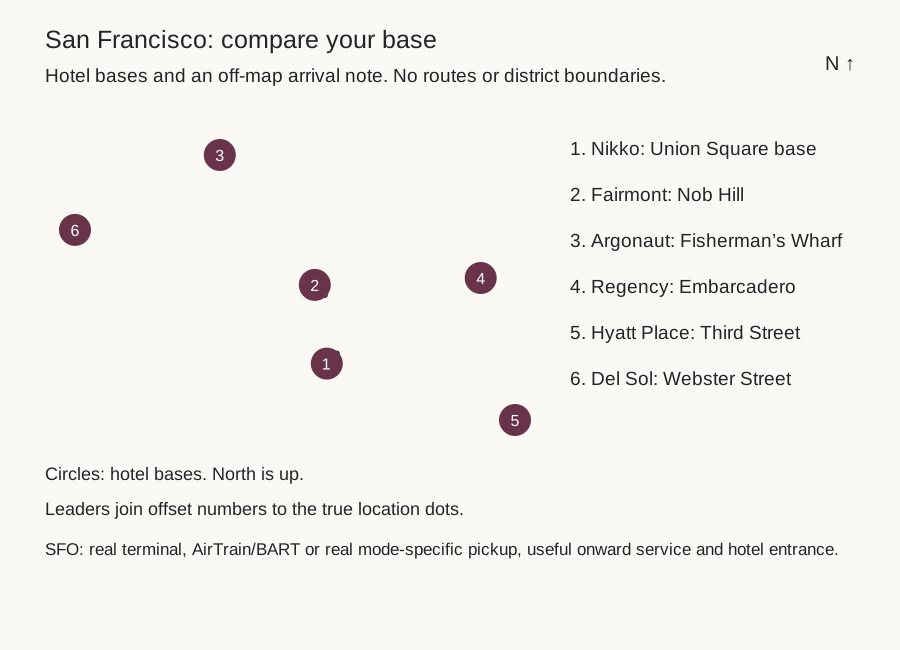
The hotel markers show these six bases. Leader lines keep the close city points clear. Plan trains, cable cars and ferries with current operator guides. Check the airport route and hotel entrance on their own. The diagram does not draw those routes or mark guest doors.
Open the map at full size. Original point map from cited coordinates, checked October 2026. No street map or route geometry is reused.
Compare real main beds and needed private space with the daily base. Retain disputed owner room wording rather than silently upgrading doubles to queens or lounges to bedrooms. No live rate or availability is claimed.
Hotel Nikko San Francisco
Best for: Union Square-led plans with exact double or queen bed choice
Location: 222 Mason Street, San Francisco
Official evidence: Deluxe Double has two doubles for four, while Double Queen has two queens for four. Junior has a private king bedroom and separate living room, with a three-person limit.
Trade-off: Confirm Junior’s third sleeping place. Imperial Two Bedroom lists only two guests, so ask directly before planning a larger party.
Before booking: Check the room name and guest limit. Confirm each bed and any extra sleeping place. Ask about separate bedrooms and bathroom features you need. Plan the full airport route and daily returns.
Best for: Choose Nob Hill with the exact room and main beds confirmed.
Location: 950 Mason Street, San Francisco
Official evidence: Main-building two queens is distinct from Junior Family open plan with two queens and sofa bed.
Trade-off: Family’s bunk heading differs from its bed and sleeper description. Ask for the complete bed layout in writing; a tower or view category does not settle it.
Before booking: Obtain the full bed layout in writing for the named room and everyone staying. Ask about any separate bedroom and bathroom features you need. Plan the entrance route and daily returns.
Best for: Wharf-led visit with private king bedroom and queen sleeper
Location: 495 Jefferson Street, San Francisco
Official evidence: Named one-bedroom suites list private king and queen sleeper in living room. Connecting two queens requires separate reservation.
Trade-off: The connection and combined cap need agreement. Loft-style wording does not prove stairs, and a view does not include an island visit.
Before booking: Confirm the suite name and beds for everyone. Book any connecting room separately and secure the pair. Ask about the bathroom and full entrance route, then check each pier or visitor gate and the return.
Best for: An Embarcadero stay with confirmed bed sizes for everyone
Location: 5 Embarcadero Center, San Francisco
Official evidence: Club two doubles has consistent bed wording and cap four. King Water View lists two; several other king products list three with extra-bed request terms.
Trade-off: Several two-queen headings describe two doubles in the body, including adapted rooms. Ask for the actual bed size and named bathroom before booking.
Before booking: Confirm beds for everyone and book the named bath or roll-in shower category you need. Plan from the airport to reception and onward to each visitor entrance; a view does not settle those journeys.
Best for: Third Street base with exact plain or sleeper room
Location: 701 Third Street, San Francisco
Official evidence: Plain king or two queens differs from Plus Sofa Bed products. One Bedroom King Plus Sofa Bed differs from corner king with love seat.
Trade-off: Sofa bed is not in every room; love seat is not proved sleeper. Exact guest caps and bedroom doors need agreement.
Before booking: Confirm the room name, main beds and any sofa sleeper for everyone. Ask about the named adapted bath category if needed. Plan the airport journey and the entrance and late return for your event.
Best for: Marina base with convertible twin family plan or exact kitchenette suite
Location: 3100 Webster Street, San Francisco
Official evidence: Family Suite names queen and two twins converting to king. Junior has queen and queen sleeper; Executive names living area and kitchenette.
Trade-off: Confirm each category’s guest limit and bedroom doors. Ask about Executive’s cooking tools. Poolside Queen is excluded from the general air-conditioning and heating description.
Before booking: Confirm the king or twin layout and beds for everyone. Ask about the bathroom, cooking tools and climate control in the named room. Plan the full airport journey and daily returns.
Complete SFO BART, Muni and the real hotel entrance
Start the SFO journey with the real flight terminal. The airport's current ground-transport page places BART in the International Terminal. AirTrain connects airport points with BART, including the Garage G AirTrain/BART stop. Follow the current terminal signs and selected route rather than treating an older saved airport image as the complete plan.
AirTrain is airport circulation, not a city hotel train. Getting to BART is one stage of the journey. The useful current city station and any onward service still need to be chosen. Add the real hotel entrance and approach with bags so the plan ends at the right door rather than a broad Downtown label.
Keep SFO distinct from Oakland airport. The current BART airport guide addresses both, but their airport connections are not the same starting point. Check the airport code on the real flight before using a route note. A good SFO plan should not be copied to another airport because both serve the Bay Area.
For Nikko, retain 222 Mason Street in the hotel destination. Fairmont is another Mason Street address, so its full name and number also matter. Argonaut uses Jefferson Street, while Regency is at 5 Embarcadero Center. Hyatt Place is on Third Street and Del Sol on Webster Street.
The full address helps avoid choosing the wrong hotel from a broad area label.
Choose the city station through the real next leg. The useful point for one hotel may not be the most suitable point for another. Check current station access if a lift or step-free route is needed. A station name alone does not identify every exit or guarantee that the final approach suits your party.
Allow for your own arrival process before choosing a scheduled train. Bags and reaching the correct airport connection are part of the real trip. This guide does not claim a fixed terminal-to-hotel time. Keep a suitable alternative if a late flight or delay makes the intended service unhelpful.
Do not assume that BART or every onward Muni route runs through the whole night. Use the real travel date and useful service after the flight. A late arrival may need a different mode with current pickup instructions. Build that alternative before travel so check-in does not depend on an uncertain last connection.
The return flight needs a separate check. Choose the useful airport-bound service through the airport arrival your flight requires. Include the hotel-to-station or pickup approach and the correct terminal connection. A convenient inbound station does not prove the outbound service fits an early departure.
For a taxi or app-based ride, use the current pickup instructions for that mode and terminal. The waiting point may differ from another mode's pickup. Give the full passenger and bag count, with any needed child seating or adapted vehicle. A destination agreed by an app does not itself establish that the assigned vehicle meets every need.
If a hotel offers a transport suggestion, keep the real provider and current terms clear. A suggestion is not proof of an included hotel shuttle. Ask about the full price and any needed advance setup for the real date. Do not use a generic airport-transfer heading to remove a real onward connection from the comparison.
Muni is the current local travel source for bus and rail journeys in the city. Cable-car choices have their own service and fare terms, which should not be assumed from a general local ticket. Use the real route and date for the journey. A scenic ride can be part of a useful plan without being the only dependable return for the party.
For a convention visit, name the real event entrance and finishing time. At a stadium, use the real gate. With a waterfront service, use the real departure pier and operator instructions. Those points should remain distinct rather than becoming one attraction pin at the centre of an area.
A ferry or island visit needs its own ticket and return plan. A hotel view does not grant admission or reserve a departure. Check the current operator terms for the real date and keep them beside the room booking. If the outing is optional, do not let one uncertain departure decide an otherwise unsuitable daily base.
For a party splitting into separate activities, test both sets of journeys. One guest may attend an event while another visits a different area or returns early. A shared hotel should give both a usable plan. Compare the least flexible repeated trip before choosing the base around the most photogenic outing.
Keep luggage and needed access in the final approach. A route that works for an unencumbered adult may not meet the party's real needs after a flight. Use the current useful connection and real entrance rather than an assumed direct walk. If a different mode is needed for that leg, include its real cost and terms.
Room access remains separate from transport. An early airport arrival does not grant early check-in. A late arrival needs a clear property arrival plan for the real booking. Keep luggage setups and any arrival instructions with the room terms rather than treating a useful train as proof the room will be available at once.
Use current BART, Muni and ferry information for the actual journey. The hotel diagram compares relative locations, so plan the station exit, street route and particular guest entrance separately. Check any route without steps directly rather than inferring it from a short gap between markers.
Compare the airport and repeated daily travel with the full room total. A private king suite may earn a different route for one party. Another may value direct access to a daily event door. Neither benefit by itself outweighs the other.
Choose the complete agreed setup that works for the guests and real schedule.
Match San Francisco main beds and private space to daily plans
A first visit is easier to compare once the daily destinations are concrete. Put the real hotel entrances beside the doors you will repeat. Union Square-led Nikko, Nob Hill Fairmont and Wharf Argonaut are distinct bases. Embarcadero Regency, Third Street Hyatt Place and Webster Street Del Sol should be tested through the same real dates and needs.
For a couple sharing one bed, begin with that main bed and the room features you will use. A king or queen can both be considered through the party's preference. A private living room can matter if one guest stays awake later. Extra sleepers should not decide the comparison if nobody will use them.
For adults who do not share, real main beds deserve priority. Nikko's two doubles and two queens are distinct products. Regency's disputed queen headings need a clear reply, while its Club two doubles can be judged on its real bed size. Del Sol's separate twins can offer another setup only when their real setup and full guest terms are agreed.
For a family wanting everyone in main beds, do not begin by counting every sofa as a bed. Nikko's named two-queen room and Del Sol's queen-and-twins product give different main-bed plans. Fairmont's family bunk conflict remains unclear here. Obtain the real offered beds and agreed party before deciding that one apparent family room is the solution.
For a party willing to use a sleeper, keep its proved size and exact product. Argonaut's named one-bedroom suites give a queen sleeper, while Hyatt Place requires the Plus Sofa Bed version. A love seat is not by itself a sleeper. A cap without a sleeping-surface description still leaves a practical question to resolve.
For three travellers, Nikko Junior's private king bedroom and listed cap three are useful facts, but the third sleeping place needs agreement. Regency King Water View lists two, while other king products have different cap and extra-bed terms. Do not transfer the highest number to the room you prefer. Keep all real sleeping places with the named product and dates.
For a family needing separation after bedtime, compare real private bedrooms. Nikko Junior and Argonaut's named one-bedroom suites describe private king rooms. Fairmont Junior Family is open plan. Hyatt Place one-bedroom wording still needs the real closing-door check for your use.
Decide what the living room becomes once any sleeper is prepared.
For a larger party needing connected rooms, Argonaut provides a clear example of why the second reservation matters. Its suite's possible two-queen connection is not included in the suite alone. Obtain the real pair, agreed combined party and internal connection terms. If the connection cannot be settled, choose an setup the party can use without it rather than relying on a hopeful request.
For a guest needing an adapted bath, keep the exact room and beds together. Regency's adapted queen headings still have double-bed body conflicts. Hyatt Place adapted tub products have distinct sleeper versions. A broad accessible label does not settle every needed bath or bedroom setup, so obtain one complete agreed product before choosing it.
For travellers unable to use internal stairs, do not interpret loft-style design as a two-level layout. Ask about real levels in the offered Argonaut suite. Equally, a second-floor room at Del Sol needs a real access-route answer rather than an assumption either way. The useful proof is the real entrance-to-room path with the needed room features.
For meals, separate cold storage from cooking. Nikko's refreshment storage and Hyatt Place mini-fridge do not prove a stove. Del Sol Executive names kitchenette and microwave, with mini-fridge on request, but full cooking tools still need agreement. Decide what meals you plan to make before accepting a room because of a broad kitchen-sounding label.
For a longer visit, give the room's practical use enough weight. A sleeper used every night can remove shared living space throughout the stay. A private bedroom can be valuable, but only with the right guest plan. Compare the real room once it is in use rather than its daytime photograph or total floor area alone.
On a convention-led visit, test the real event entrance from each plausible base. A hotel described as Downtown is not a timed route to every door. Add the return after the final session and any evening dinner. Then compare the real main beds and needed bath so an attractive route does not hide an unclear room setup.
On a stadium-led visit, use the ticket's real gate and current venue guidance. Hyatt Place's Third Street base can be assessed through that real journey rather than a broad nearby label. Check the useful return after the event ends. Keep a separate plan for anyone who will not attend or will leave early.
On a waterfront visit, compare Argonaut and Regency through the exact pier or visitor door. A view and waterfront address do not establish ticket inclusion or the same final approach. Include the real operator's return terms. If the visit is just one part of a longer trip, balance it against the repeated destinations rather than making it the sole base decision.
On a Nob Hill stay, check the real approach the party can use. Do not let an attractive room override an needed route need. If a provider is needed for one leg, include that real cost and pickup plan. A useful room and a useful journey have to work together for the booking to make sense.
On a Marina-led trip, keep the Webster Street point specific. Del Sol's Family twins or combined king setup may fit one party, while its Junior queen sleeper suits another. The exact room should remain tied to the real daily destinations. A family theme does not itself settle beds, climate control or the late return.
For a short stay, avoid spending the whole visit making room changes to solve an uncertain feature. Resolve the needed bed and bath questions before paying. A clear suitable ordinary room can be more useful than a disputed premium product. Compare only the confirmed choices once the trip's fixed parts are known.
For guests bringing a car, add the real vehicle's hotel parking terms and the destination parking needs. A room with parking in one rate is not proof every rate includes it. A car used for one outing may be unnecessary for other days. Compare how you will travel in practice rather than letting car availability stand in for a full daily plan.
For any room change, repeat the needed feature check. A new view or floor can arrive with different main beds or bath. A different suite can lose the private door or sleeper size that made the first product suitable. Keep the real agreed setup in writing rather than assuming an upgrade preserves every useful feature.
For two closely matched bases, compare the least flexible repeated journey. An early appointment or a late event return can matter more than an optional outing. Choose the room and route that protect the fixed plan for the party. Keep the other visit flexible rather than making an needed trip depend on a doubtful connection.
Before paying, check the full hotel and room name. Confirm the guest limit and a bed or prepared sofa sleeper for everyone. Ask about separate bedrooms, the bathroom and cooking tools you need. Check whether requests are confirmed and read all charges and cancellation terms. Plan the airport journey and daily returns before choosing the full stay.
Before you choose a room
Choose real repeat destinations before the area label.
At Nikko, choose doubles or queens deliberately and ask which bed serves Junior’s third guest.
Resolve Fairmont family bunk heading/body conflict before booking it.
Keep Argonaut private suite distinct from separately reserved connection.
Resolve Regency queen versus double wording for exact room.
At Hyatt Place, retain plain versus Plus Sofa Bed product.
At Del Sol, agree twin or king conversion and exact suite tools.
Confirm beds for everyone, which bedrooms close with doors and the bathroom features in that same room.
Complete current SFO terminal and useful city station with hotel leg.
Add real pier or event gate and late return.
Compare full charges and cancellation once room and route fit.
Open the hotel you chose on Trip.com and check the exact room before you pay.
San Francisco sources, check dates and corrections
This is desk research from the sources linked below, with hotel location and feature checks in October 2026. We have not stayed at or tested these hotels. The area choices express our judgment about trip fit. No price, availability, safety grade or service rating is implied.
Fisherman's Wharf San Francisco Hotel Rooms & Suites: Argonaut separates one-bedroom suites from an additional two-queen room that needs its own reservation, so confirm the whole connecting arrangement before booking for a group.
Hyatt Regency San Francisco: rooms: Hyatt's two-queen headings conflict with some two-double descriptions, so ask for the actual bed size and party limit instead of silently treating those products as identical.
Hyatt Place San Francisco/Downtown: rooms: Hyatt Place distinguishes ordinary rooms from named sofa-bed and one-bedroom products, so a corner-room love seat should not be assumed to supply another sleeping place.
Room Archive - Hotel Del Sol: Del Sol separates family and Junior Suite bed plans and gives room-specific cooling exceptions, so confirm the exact product rather than assume every room has identical equipment.
Muni | SFMTA: SFMTA provides local bus and rail information, so check the actual route and ticket terms rather than assume cable cars and ordinary services are interchangeable.
Executive Suite - Hotel Del Sol: The Executive description lists a king and sofa sleeper with a kitchenette, but its microwave and requested fridge do not establish a full stove-equipped kitchen.
Trip.com: Hotel Nikko San Francisco location: The listing places Hotel Nikko San Francisco in San Francisco for the hotel map; check the hotel’s own directions for the entrance and your route.
Trip.com: Fairmont San Francisco location: The listing places Fairmont San Francisco in San Francisco for the hotel map; check the hotel’s own directions for the entrance and your route.
Trip.com: Argonaut Hotel location: The listing places Argonaut Hotel in San Francisco for the hotel map; check the hotel’s own directions for the entrance and your route.
Trip.com: Hyatt Regency San Francisco location: The listing places Hyatt Regency San Francisco in San Francisco for the hotel map; check the hotel’s own directions for the entrance and your route.
Trip.com: Hotel Del Sol location: The listing places Hotel Del Sol in San Francisco for the hotel map; check the hotel’s own directions for the entrance and your route.
A dated check records what the source said at that point. It does not guarantee that the stay or route is unchanged. If you spot an error, send the page and the correction. We can then recheck the affected hotel or area, or arrival note.
Where should a first-time visitor stay in San Francisco?
Compare Nikko for Union Square-led plans, Fairmont for Nob Hill or Argonaut for a Wharf-led visit. Regency is an Embarcadero choice, Hyatt Place a Third Street base and Del Sol a Webster Street/Marina option. Choose through real repeat destinations and usable rooms. Complete airport and late returns for your party.
Are Nikko Deluxe Double beds queens?
The owner lists two doubles in Deluxe Double and two queens in Deluxe Double Queen, both with listed cap four. Keep the exact product name. Junior Suite instead names private king bedroom and cap three, with the third sleeping place still needing agreement.
Does Nikko Imperial two-bedroom wording prove a large-party suite?
No. The Imperial overview describes two bedrooms but lists only two guests. Ask the hotel for the complete bed plan and written acceptance of any larger party. A bedroom count does not increase the stated guest limit.
Is Fairmont Family bunk setup fully clear?
No. The heading names two queens with bunk bed, while the body gives queen or doubles with pull-out wording. The exact main beds and bunk setup remain disputed here. Junior Family is separately described as open plan with two queens and sofa bed.
Does Argonaut one-bedroom include the connecting two-queen room?
The owner says that connection requires a separate reservation. A named one-bedroom suite itself has private king bedroom and queen sleeper in the living room. Agree the real connection and full combined party before paying for that setup.
Does Regency two-queen heading settle bed size?
Several current headings say queens while their descriptions say two doubles. This guide retains that conflict rather than choosing the larger bed. Club two doubles is consistently described. Obtain a clear product-specific reply if bed size is needed.
Do all Hyatt Place rooms have sleeper sofas?
No such claim is made here. Plain king and two-queen products are distinct from Plus Sofa Bed versions. Corner One Bedroom King names a love seat, which is not treated as a sleeper. Keep the exact room and agreed guest plan.
What beds does Del Sol Family Suite name?
The owner names one queen and two twins that convert to a king. Agree the real setup with the party. Junior Suite instead names queen and queen sleeper; Executive names kitchenette and living area with exact tools still to be agreed.
Does AirTrain take me to a city hotel?
AirTrain connects airport points and BART, including the Garage G AirTrain/BART stop. Complete the useful city train and any onward service with the hotel entrance. Current terminal and mode-specific pickup directions still matter.
Does a bay-view suite include an Alcatraz visit?
A view is a room feature and does not establish a ferry ticket or admission. Keep the real visitor pier and current operator terms separate. Check the useful trip and return to the hotel for the real date.
Verdict: where to stay in San Francisco
Choose where to stay in San Francisco by comparing Union Square, Nob Hill, the Wharf, the Embarcadero, Third Street and the Marina with your plans. Check beds for everyone. Ask which bedrooms close with doors. Resolve Fairmont or Regency’s conflicting room descriptions, and do not borrow a sleeper from another category. Plan the airport journey and returns from your visitor or event entrances before comparing the full rate.
Open the hotel you chose on Trip.com and check the exact room before you pay.